What is Hackers' Pub?

Hackers' Pub is a place for software engineers to share their knowledge and experience with each other. It's also an ActivityPub-enabled social network, so you can follow your favorite hackers in the fediverse and get their latest posts in your feed.


0
0
0
0
0

There's a recurring theme in technology that the creators of something popular don't understand why it is popular. Often it's in spite of the thing that they think is important and often because of some completely unrelated ecosystem effects. Then they build a second thing that does whatever they thought was important in the first one, only more so. And they're confused about why it's not popular.

0

You can throw barely optimized code at a compiler and an executable file will come out at the other side. Think of the worst coding patterns: software might still work even when it uses goto statements. The cost for badly coded, sloppy software shows in decreased performance and stability, higher maintenance costs, and so on. The main “customer” of the code, though, are compilers, and they don’t really care about those aspects as long as the code runs. That’s why tests, linting, benchmarking, and human reviews exist.

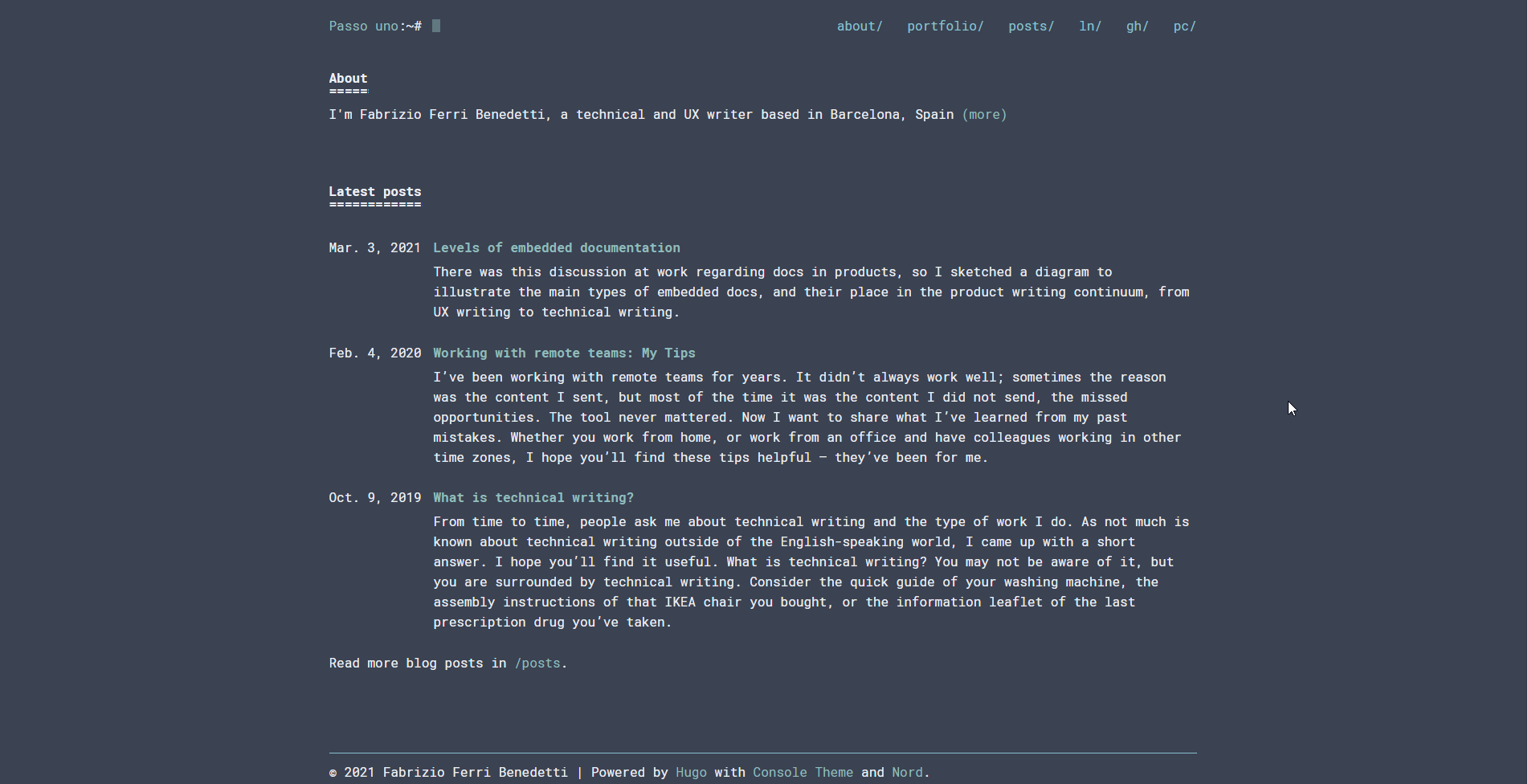
With docs, the story is quite different. The compilers of docs are minds, either human or artificial. They are presented with content they must understand or, in the case of LLMs, process as context. The equivalent of code-that-compiles for docs is comprehension and the feeling of having satisfied a need. The only way of getting humans or LLMs to do something with a software product is through findable, succinct, easy to reproduce, accurate, and up-to-date explanations. Just putting words together won’t cut it.

passo.uno/real-cost-of-documen

0
0
0
0
1
0
0
0
0
0
1
0
0
1
0
0
0
0
0
0
0
1
0
0
0
1
0
0
1
1
0

d〇como「自宅のインターネットは10Gbpsの時代!」
ぼく「自宅にアライドテレシスとかシスコのトップエンドルータでも導入する奴おるんか?んなバカなw」
知人1「いるぞ」
知人2「いるぞ」
知人3「いるぞ」
ぼく「おったわ」

1
1
1
0
0
1
0
1
0
0
0
6
0
1
0

What I really dislike in the "LLM makes mistakes just like humans" line of argument is that in its foundation there is one specific principle:

"Bad answer is better than no answer. Badly done work is better than the work not done at all"

It is older than AI/LLM discussion, and I always hated seeing it applied in practice.

There are some situations and places where it is valid.

But it is not some kind of universal law of nature. You can not scale it up unconditionally with no consequences.

0
0