What is Hackers' Pub?

Hackers' Pub is a place for software engineers to share their knowledge and experience with each other. It's also an ActivityPub-enabled social network, so you can follow your favorite hackers in the fediverse and get their latest posts in your feed.

I've been thinking about adding federation health monitoring to —not as a separate data store or custom API, but by extending the existing integration. The idea is to expose delivery outcomes, signature verification failures, and per-remote-host error rates as OpenTelemetry metrics alongside the spans Fedify already emits. If you already have a Prometheus or Grafana setup, you'd get federation observability basically for free. Circuit breaker behavior (temporarily skipping a remote server that's been consistently unreachable) could surface as OpenTelemetry events, keeping everything in the same trace context rather than scattered across separate logs.

Does this sound useful to you? I'm curious whether people building on Fedify—or running federated servers in general—would actually reach for this, and what kinds of things you'd most want to observe. Happy to hear any thoughts.

0
0
아니 정부24 멀쩡한 민원 검색 창을 AI 챗봇 입력창으로 바꿔놨네
왜그러는건데 왜 정부24한테 AI같은거 기대하는사람 아무도 없어 원천소득영수증이나 내놓으라고
0
0
0
0

Release v3.3.3 of Ktistec

Todd Sundsted @toddsundsted@epiktistes.com

I have started work on a Mastodon-compatible API layer intended to support the many Mastodon front-ends available. It is incomplete and requires an explicit build flag to enable, but what's there (the main timeline) already works with the official Mastodon app, Tusky, and Phanpy.

Here's the full changelog:

Fixed

  • Editor focus now stays in the editor after the first draft is saved. (fixes #139)
  • Filter settings instructions. (fixes #135)

Changed

  • Improved consistency of mini button colors.

As always, check out the full diff for the complete details.

#ktistec #crystallang #activitypub #fediverse

Read more →
0
0
0
0
1
0
中華の素みたいな奴を入れただけなんだけれど、互いにいい感じに引き立て合ってる!めちゃうま
中華の素だけで作ったスープって、たしかにうまみはあるけれど、味に深みが全くなくてすぐ飽きがくる。けれど茹で汁で作ると中華の素少なめでもぜんぜん飽きが来ない。
1

Trump wants billions more for his war with Iran, and he needs Democratic votes to get it.

While most Dems are openly opposed to giving this lawless regime more money to kill Iranians, some are being cagey and Hakeem Jeffries is currently declining to organize House Democrats against war funding. nbcnews.com/politics/congress/

0
0
0
1
0
0
0
0
1
1
0
─── ⋆⋅​:serafukumoe:​⋅⋆ ───
세라복.모에 중요 공지

츠키노시타 학생 여러분 안녕하세요! 학생회장 요즈미나입니다.

저희 츠키노시타가 본래 승인제로 받던 가입을 무기한 오픈제로 운영합니다!

조만간 미스키 최신버전으로 업그레이드도 할 예정이니 세라복.모에에 많은 관심 부탁드려요!

:choccy_milk:
5
1
1

Lotus 1-2-3 on the PC w/DOS

stonetools.ghost.io/lotus123-d

VisiCalc started it, but 1-2-3 finished it. "It" being the discussion of what a spreadsheet can be, and also VisiCalc itself.

<- this is fun, but it is basically "a millennial discovers what you could do with 1-2-3 before they were born, and is blown away."

0
1
0
0
0

I'm writing this in English.

Not because English is my first language—it isn't. I'm writing this in English because if I wrote it in Korean, the people I'm addressing would run it through an outdated translator, misread it, and respond to something I never said. The responsibility for that mistranslation would fall on me. It always does.

This is the thing Eugen Rochko's post misses, despite its good intentions.

@GargronEugen Rochko argues that LLMs are no substitute for human translators, and that people who think otherwise don't actually rely on translation. He's right about some of this. A machine-translated novel is not the same as one rendered by a skilled human translator. But the argument rests on a premise that only makes sense from a certain position: that translation is primarily about quality, about the aesthetic experience of reading literature in another language.

For many of us, translation is first about access.

The professional translation market doesn't scale to cover everything. It never has. What gets translated—and into which languages—follows the logic of cultural hegemony. Works from dominant Western languages flow outward, translated into everything. Works from East Asian languages trickle in, selectively, slowly, on someone else's schedule. The asymmetry isn't incidental; it's structural.

@GargronEugen Rochko notes, fairly, that machine translation existed decades before LLMs. But this is only half the story, and which half matters depends entirely on which languages you're talking about. European language pairs were reasonably serviceable with older tools. Korean–English, Japanese–English, Chinese–English? Genuinely usable translation for these pairs arrived with the LLM era. Treating “machine translation” as a monolithic technology with a uniform history erases the experience of everyone whose language sits far from the Indo-European center.

There's also something uncomfortable in the framing of the button-press thought experiment: “I would erase LLMs even if it took machine translation with it.” For someone whose language has always been peripheral, that button looks very different. It's not an abstract philosophical position; it's a statement about whose access to information is expendable.

I want to be clear: none of this is an argument that LLMs are good, or that the harms @GargronEugen Rochko describes aren't real. They are. But a critique of AI doesn't become more universal by ignoring whose languages have always been on the margins. If anything, a serious critique of AI's political economy should be more attentive to those asymmetries, not less.

The fact that I'm writing this in English, carefully, so it won't be misread—that's not incidental to my argument. That is my argument.


0
0

I'm writing this in English.

Not because English is my first language—it isn't. I'm writing this in English because if I wrote it in Korean, the people I'm addressing would run it through an outdated translator, misread it, and respond to something I never said. The responsibility for that mistranslation would fall on me. It always does.

This is the thing Eugen Rochko's post misses, despite its good intentions.

@GargronEugen Rochko argues that LLMs are no substitute for human translators, and that people who think otherwise don't actually rely on translation. He's right about some of this. A machine-translated novel is not the same as one rendered by a skilled human translator. But the argument rests on a premise that only makes sense from a certain position: that translation is primarily about quality, about the aesthetic experience of reading literature in another language.

For many of us, translation is first about access.

The professional translation market doesn't scale to cover everything. It never has. What gets translated—and into which languages—follows the logic of cultural hegemony. Works from dominant Western languages flow outward, translated into everything. Works from East Asian languages trickle in, selectively, slowly, on someone else's schedule. The asymmetry isn't incidental; it's structural.

@GargronEugen Rochko notes, fairly, that machine translation existed decades before LLMs. But this is only half the story, and which half matters depends entirely on which languages you're talking about. European language pairs were reasonably serviceable with older tools. Korean–English, Japanese–English, Chinese–English? Genuinely usable translation for these pairs arrived with the LLM era. Treating “machine translation” as a monolithic technology with a uniform history erases the experience of everyone whose language sits far from the Indo-European center.

There's also something uncomfortable in the framing of the button-press thought experiment: “I would erase LLMs even if it took machine translation with it.” For someone whose language has always been peripheral, that button looks very different. It's not an abstract philosophical position; it's a statement about whose access to information is expendable.

I want to be clear: none of this is an argument that LLMs are good, or that the harms @GargronEugen Rochko describes aren't real. They are. But a critique of AI doesn't become more universal by ignoring whose languages have always been on the margins. If anything, a serious critique of AI's political economy should be more attentive to those asymmetries, not less.

The fact that I'm writing this in English, carefully, so it won't be misread—that's not incidental to my argument. That is my argument.

5
13
0

Zajímavá úvaha k situaci v

Zdroj: údajně Lucie Sulovská na Facebooku, ale ten nemám a nemůžu se doklikat na veřejný odkaz, tak sdílím bez souhlasu autorky. Nejspíš teda jde o překlad (?), původní zdroj prý Xitter (?).

„V roce 2003 sledoval generálmajor Mohammad Alí Džafarí, jak Spojené státy během tří týdnů rozdrtily centralizovanou velitelskou strukturu Saddáma Husajna. Následující čtyři roky strávil v Centru strategických studií Revolučních gard (IRGC) navrhováním vojenské architektury, kterou by nebylo možné „dekapitovat“.

V září 2007 byl jmenován velitelem IRGC a okamžitě přestavěl celý íránský vojenský systém: rozdělil ho na 31 autonomních provinčních velitelství – jedno pro každou provincii. Každé z nich má vlastní velitelství, vlastní systém velení a řízení, vlastní arzenál raket a dronů, flotily rychlých útočných člunů, integrované milice Basídž, předem delegované pravomoci k odpalu, zásoby munice i zapečetěné krizové rozkazy.

Tato doktrína byla vytvořena pro jediný scénář: smrt nejvyššího vůdce. Tento scénář nastal 28. února 2026. Doktrína se aktivovala během několika hodin. A běží dodnes. Otázka, kterou si téměř nikdo nepoložil, zní: může ji vůbec někdo uvnitř Islámské republiky vypnout?

Článek 110 íránské ústavy z roku 1979 svěřuje veškeré velení nad ozbrojenými silami výhradně nejvyššímu vůdci. Pouze on je vrchním velitelem. Pouze on jmenuje a odvolává vojenské vedení. Žádná jiná instituce – ani prezident, ani parlament, ani Rada dohlížitelů, ani soudy – nemá ústavní pravomoc vydávat vojenské rozkazy nebo rušit rozhodnutí nejvyššího vůdce.

Rozkazy o předem delegovaném velení vydal Alí Chameneí.

Alí Chameneí je mrtvý.

1/3

0

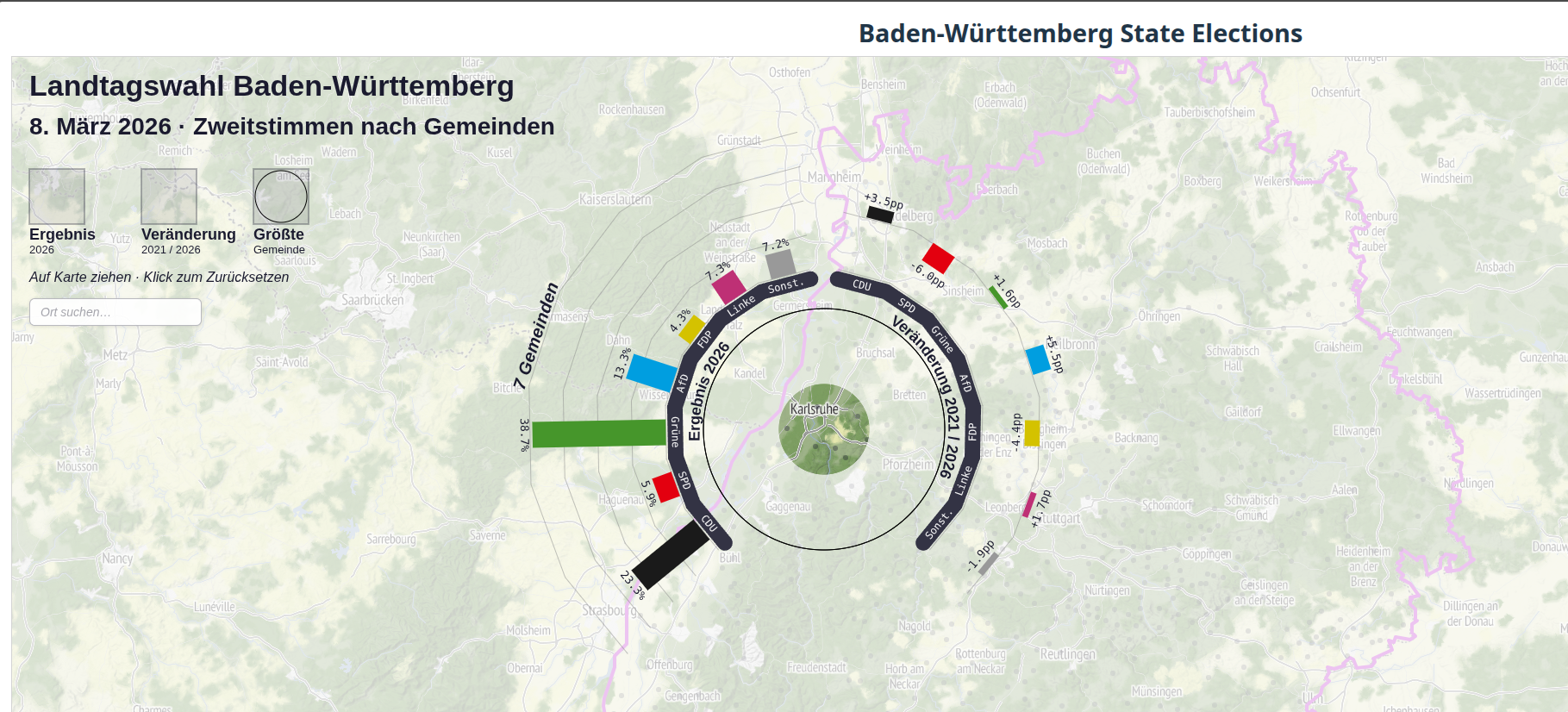
Wenn ihr euch für die Landtagswahlergebnisse in Baden-Württemberg interessiert oder sehen möchtet, was mit UX alles möglich ist, dann schaut euch diese Webseite an: visquill.com/gallery/?example=.

Ihr könnt auf einer Karte einen runden Kreis ziehen und seht dann die Ergebnisse bzw. die Veränderung zum letzten Ergebnis.
Ich glaube, die Person, die diese Webseite erstellt hat, ist nicht auf Mastodon. Den Beitrag habe ich auf LinkedIn gefunden.

linkedin.com/posts/benjamin-ni

Ein Screenshot von einer Webseite. Es ist eine Karte zu sehen auf der Kreis ist wo Kalrsruhe zu sehen ist. Um den Kreisherum sind auf der linken Seite die Wahlergebnisse und auf der rechten Seite die Veränderung der Stimmen zur letzten Wahl.
0
0

I'm writing this in English.

Not because English is my first language—it isn't. I'm writing this in English because if I wrote it in Korean, the people I'm addressing would run it through an outdated translator, misread it, and respond to something I never said. The responsibility for that mistranslation would fall on me. It always does.

This is the thing Eugen Rochko's post misses, despite its good intentions.

@GargronEugen Rochko argues that LLMs are no substitute for human translators, and that people who think otherwise don't actually rely on translation. He's right about some of this. A machine-translated novel is not the same as one rendered by a skilled human translator. But the argument rests on a premise that only makes sense from a certain position: that translation is primarily about quality, about the aesthetic experience of reading literature in another language.

For many of us, translation is first about access.

The professional translation market doesn't scale to cover everything. It never has. What gets translated—and into which languages—follows the logic of cultural hegemony. Works from dominant Western languages flow outward, translated into everything. Works from East Asian languages trickle in, selectively, slowly, on someone else's schedule. The asymmetry isn't incidental; it's structural.

@GargronEugen Rochko notes, fairly, that machine translation existed decades before LLMs. But this is only half the story, and which half matters depends entirely on which languages you're talking about. European language pairs were reasonably serviceable with older tools. Korean–English, Japanese–English, Chinese–English? Genuinely usable translation for these pairs arrived with the LLM era. Treating “machine translation” as a monolithic technology with a uniform history erases the experience of everyone whose language sits far from the Indo-European center.

There's also something uncomfortable in the framing of the button-press thought experiment: “I would erase LLMs even if it took machine translation with it.” For someone whose language has always been peripheral, that button looks very different. It's not an abstract philosophical position; it's a statement about whose access to information is expendable.

I want to be clear: none of this is an argument that LLMs are good, or that the harms @GargronEugen Rochko describes aren't real. They are. But a critique of AI doesn't become more universal by ignoring whose languages have always been on the margins. If anything, a serious critique of AI's political economy should be more attentive to those asymmetries, not less.

The fact that I'm writing this in English, carefully, so it won't be misread—that's not incidental to my argument. That is my argument.

5
13
0

I'm writing this in English.

Not because English is my first language—it isn't. I'm writing this in English because if I wrote it in Korean, the people I'm addressing would run it through an outdated translator, misread it, and respond to something I never said. The responsibility for that mistranslation would fall on me. It always does.

This is the thing Eugen Rochko's post misses, despite its good intentions.

@GargronEugen Rochko argues that LLMs are no substitute for human translators, and that people who think otherwise don't actually rely on translation. He's right about some of this. A machine-translated novel is not the same as one rendered by a skilled human translator. But the argument rests on a premise that only makes sense from a certain position: that translation is primarily about quality, about the aesthetic experience of reading literature in another language.

For many of us, translation is first about access.

The professional translation market doesn't scale to cover everything. It never has. What gets translated—and into which languages—follows the logic of cultural hegemony. Works from dominant Western languages flow outward, translated into everything. Works from East Asian languages trickle in, selectively, slowly, on someone else's schedule. The asymmetry isn't incidental; it's structural.

@GargronEugen Rochko notes, fairly, that machine translation existed decades before LLMs. But this is only half the story, and which half matters depends entirely on which languages you're talking about. European language pairs were reasonably serviceable with older tools. Korean–English, Japanese–English, Chinese–English? Genuinely usable translation for these pairs arrived with the LLM era. Treating “machine translation” as a monolithic technology with a uniform history erases the experience of everyone whose language sits far from the Indo-European center.

There's also something uncomfortable in the framing of the button-press thought experiment: “I would erase LLMs even if it took machine translation with it.” For someone whose language has always been peripheral, that button looks very different. It's not an abstract philosophical position; it's a statement about whose access to information is expendable.

I want to be clear: none of this is an argument that LLMs are good, or that the harms @GargronEugen Rochko describes aren't real. They are. But a critique of AI doesn't become more universal by ignoring whose languages have always been on the margins. If anything, a serious critique of AI's political economy should be more attentive to those asymmetries, not less.

The fact that I'm writing this in English, carefully, so it won't be misread—that's not incidental to my argument. That is my argument.

5
13
0

@reiver@mastodon.socialis there a #FediCon account? Or shall we follow you for updates?

I have to make sure I'm there this year, so I want to make sure I can start scheduling things as early as possible. 😁

0
0
1
0
0
1
0
0
1
0