What is Hackers' Pub?

Hackers' Pub is a place for software engineers to share their knowledge and experience with each other. It's also an ActivityPub-enabled social network, so you can follow your favorite hackers in the fediverse and get their latest posts in your feed.

0

Did you know that #Youtube can pull your videos straight from your own #Peertube server?

You don't have your own Peertube?

We run #TubeFree where we give 50GB of total storage, with options to go higher with a donation!

tubefree.org

See givebutter.com/givebtfree for prices!

Want help building your OWN Peertube? We can help there as well! Just message me and let's work together!

0
0
0
0

man, if you thought afghanistan/iraq were bad, Iran seems significantly more prepared for a US attack and way more willing to drag it out for a very long time.

The people in charge are really just not very smart.

0
0
0
0
0
0
0
0
0

Can we just put it bluntly?

If you're vibe-coding open source, you are *not* doing open source.

To do open source, you must be creating source code that both has clear provenance *and* the new code you're writing is IP you have full rights to offer under compatible license. As is quickly becoming clear, that second one is getting tested and failing legal checks in places like the US.

0
5
0

I'm writing this in English.

Not because English is my first language—it isn't. I'm writing this in English because if I wrote it in Korean, the people I'm addressing would run it through an outdated translator, misread it, and respond to something I never said. The responsibility for that mistranslation would fall on me. It always does.

This is the thing Eugen Rochko's post misses, despite its good intentions.

@GargronEugen Rochko argues that LLMs are no substitute for human translators, and that people who think otherwise don't actually rely on translation. He's right about some of this. A machine-translated novel is not the same as one rendered by a skilled human translator. But the argument rests on a premise that only makes sense from a certain position: that translation is primarily about quality, about the aesthetic experience of reading literature in another language.

For many of us, translation is first about access.

The professional translation market doesn't scale to cover everything. It never has. What gets translated—and into which languages—follows the logic of cultural hegemony. Works from dominant Western languages flow outward, translated into everything. Works from East Asian languages trickle in, selectively, slowly, on someone else's schedule. The asymmetry isn't incidental; it's structural.

@GargronEugen Rochko notes, fairly, that machine translation existed decades before LLMs. But this is only half the story, and which half matters depends entirely on which languages you're talking about. European language pairs were reasonably serviceable with older tools. Korean–English, Japanese–English, Chinese–English? Genuinely usable translation for these pairs arrived with the LLM era. Treating “machine translation” as a monolithic technology with a uniform history erases the experience of everyone whose language sits far from the Indo-European center.

There's also something uncomfortable in the framing of the button-press thought experiment: “I would erase LLMs even if it took machine translation with it.” For someone whose language has always been peripheral, that button looks very different. It's not an abstract philosophical position; it's a statement about whose access to information is expendable.

I want to be clear: none of this is an argument that LLMs are good, or that the harms @GargronEugen Rochko describes aren't real. They are. But a critique of AI doesn't become more universal by ignoring whose languages have always been on the margins. If anything, a serious critique of AI's political economy should be more attentive to those asymmetries, not less.

The fact that I'm writing this in English, carefully, so it won't be misread—that's not incidental to my argument. That is my argument.

5
10
0
0
0
0
3
0
0

@leanderlindahl Vaultwarden is a clone of Bitwarden. You could ask your preferred cooperative cloud provider to host it for you. @coopcloud has both the maintained scripts as well as the betwork of coopcloud providers to dot it for you. Does tgat work for you?

Admitting I, personally, am still at KeePassXCD, that works just for me individually, no team work in that.

@WtebbensWouter Tebbens ⁂ I really like KeePassXC. It's German and I just found out I can add site icons to the different entries in the database.

And if you use a (safe!) cloud service as a central location for your database file, it syncs the site icons across the devices that have access to it. My database file is in my Proton Drive, for instance. Although Proton has a good password manager as well, I prefer KeePassXC.

@leanderlindahl @coopcloud

0

Today I’m proud to announce the release of Homebrew 5.1.0. The most significant changes since 5.0.0 are expanded brew bundle support, brew version-install, new -full formula handling and installer updates.

brew.sh/2026/03/10/homebrew-5.

0
0
0
0
0

Can we just put it bluntly?

If you're vibe-coding open source, you are *not* doing open source.

To do open source, you must be creating source code that both has clear provenance *and* the new code you're writing is IP you have full rights to offer under compatible license. As is quickly becoming clear, that second one is getting tested and failing legal checks in places like the US.

0
5
0
0
0
0
2
0
0
0
1

Frühjahrsputz: Wir räumen inaktive Accounts auf

Über die Hälfte der Accounts auf troet.cafe und muenchen.social sind seit über zwei Jahren nicht genutzt worden — zusammen über 35.000.

Bevor wir löschen, schreiben wir alle persönlich an — 60 Tage Vorwarnzeit. Wer bleiben will, muss sich nur einmal einloggen.

Ehrliche Zahlen statt aufgeblähte Statistiken. Wir hören euch zu, bevor wir handeln. Eure Meinung?

martinmuc.de/blog/inaktive-acc

0
0
7
0
0
0
1

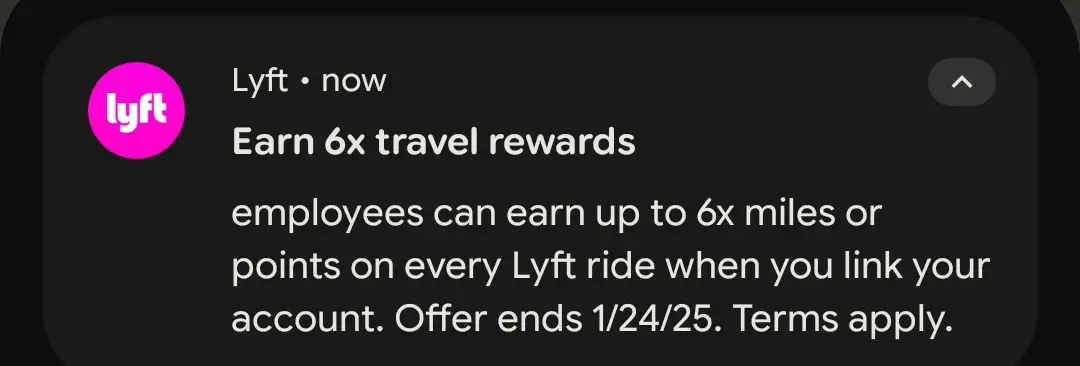
お仕事プロファイルLyftにつくるいいよってメールが来てまあもう使わないだろうなあと思いつつも必要になってからじゃ遅いので会社クレカも登録したら私用で間違えて使っちゃいそうなUIだし期限切れのキャンペーン情報来たしちょっと後悔してるw

Earn 6x travel rewards

employees can earn up to 6x miles or points on every Lyft ride when you link your account. Offer ends 1/24/25. Terms apply.
0

I'm writing this in English.

Not because English is my first language—it isn't. I'm writing this in English because if I wrote it in Korean, the people I'm addressing would run it through an outdated translator, misread it, and respond to something I never said. The responsibility for that mistranslation would fall on me. It always does.

This is the thing Eugen Rochko's post misses, despite its good intentions.

@GargronEugen Rochko argues that LLMs are no substitute for human translators, and that people who think otherwise don't actually rely on translation. He's right about some of this. A machine-translated novel is not the same as one rendered by a skilled human translator. But the argument rests on a premise that only makes sense from a certain position: that translation is primarily about quality, about the aesthetic experience of reading literature in another language.

For many of us, translation is first about access.

The professional translation market doesn't scale to cover everything. It never has. What gets translated—and into which languages—follows the logic of cultural hegemony. Works from dominant Western languages flow outward, translated into everything. Works from East Asian languages trickle in, selectively, slowly, on someone else's schedule. The asymmetry isn't incidental; it's structural.

@GargronEugen Rochko notes, fairly, that machine translation existed decades before LLMs. But this is only half the story, and which half matters depends entirely on which languages you're talking about. European language pairs were reasonably serviceable with older tools. Korean–English, Japanese–English, Chinese–English? Genuinely usable translation for these pairs arrived with the LLM era. Treating “machine translation” as a monolithic technology with a uniform history erases the experience of everyone whose language sits far from the Indo-European center.

There's also something uncomfortable in the framing of the button-press thought experiment: “I would erase LLMs even if it took machine translation with it.” For someone whose language has always been peripheral, that button looks very different. It's not an abstract philosophical position; it's a statement about whose access to information is expendable.

I want to be clear: none of this is an argument that LLMs are good, or that the harms @GargronEugen Rochko describes aren't real. They are. But a critique of AI doesn't become more universal by ignoring whose languages have always been on the margins. If anything, a serious critique of AI's political economy should be more attentive to those asymmetries, not less.

The fact that I'm writing this in English, carefully, so it won't be misread—that's not incidental to my argument. That is my argument.

5
10
0
0
0
2
0
0
0
0
0
0
0
0
0