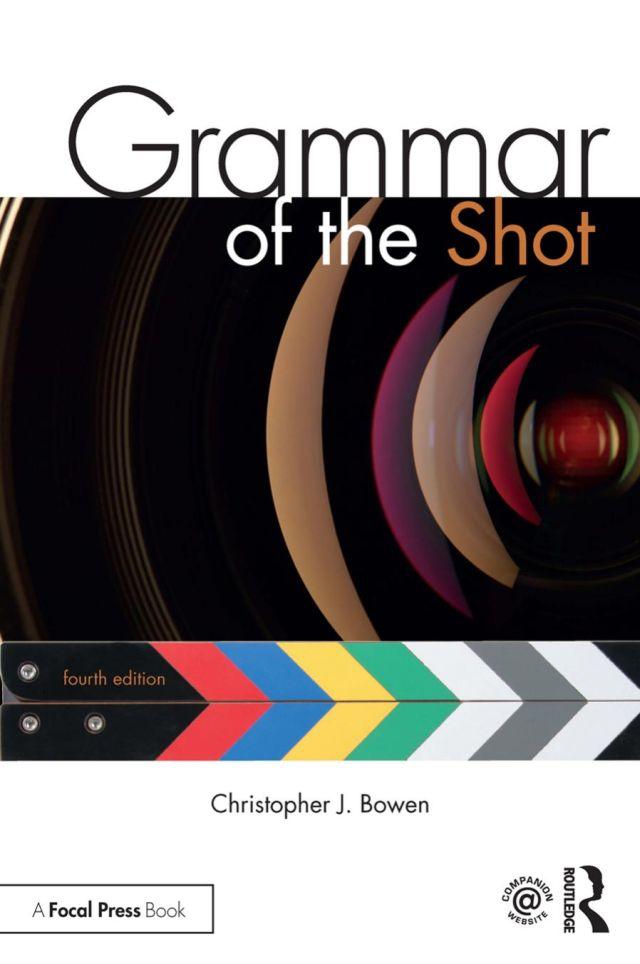
From the introduction:

It is this concept of grammar (meaning gleaned from structure) that motion picture creators rely upon so heavily. Fictional narrative films, documentaries, news reports, situation comedies, television dramas, commercials, music videos, talk shows, “reality” programming and the like, all use the same basic visual grammar to help to communicate to the viewer.
1/


For most of us living in the 21st century, the majority of our daily experiences are inseparable from interactions with digital media. We are constantly communicating with someone or something or being communicated to by someone or something: texting or speaking via smartphones; watching television or streaming media; using the internet; listening  to the radio; playing networked video games; reading books, newspapers, and magazines; 
looking at billboards and advertisements; going to the movies; and on and on it goes.  Our ability to understand these communications and gain further meaning from them is reliant upon our education and experiences: can we read, write, and speak a language, recognize images and sounds, decipher symbols, etc.?
This “education,” whether it is from schooling or just living life, helps to determine how well we can compute what we take in, and there is a lot to take in. Collectively, over time, we have learned to codify our visual communications – from pictographs to written words, to paintings, photographs, and now motion pictures. What we depict has a recognizable 
meaning. Viewers know how to decode the images that they are shown. Understanding, or clear interpretation of what is viewed, stems from the established grammar or rules of depiction that have evolved over time.
0

If you have a fediverse account, you can quote this note from your own instance. Search https://mastodon.social/users/appassionato/statuses/115631298452436927 on your instance and quote it. (Note that quoting is not supported in Mastodon.)