Coastal wetland deposition of cathode metals from the world’s largest lithium-ion battery fire - Scientific Reports
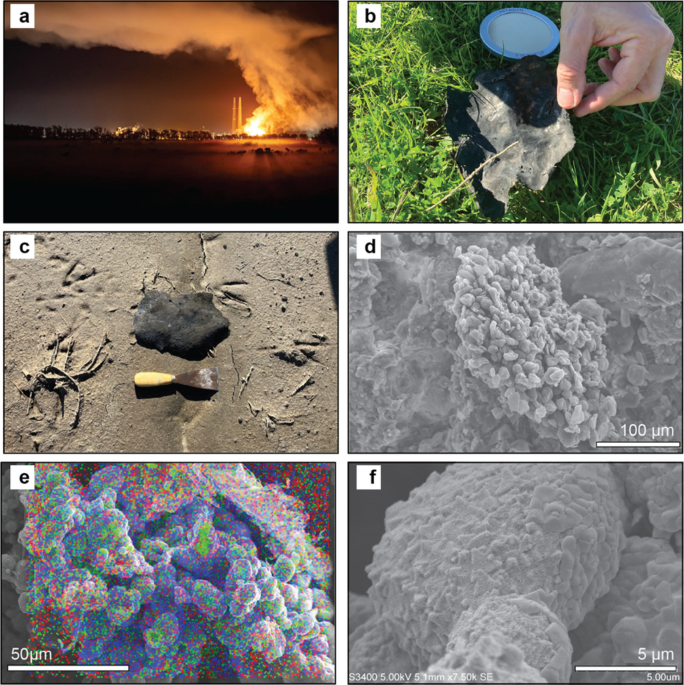
Fires at lithium-ion battery storage facilities pose emerging environmental risks that remain largely undocumented under real-world conditions. Following a major fire at the world’s largest Battery Energy Storage System (BESS) in Moss Landing, California, we conducted rapid, high-resolution soil surveys to quantify metal fallout in adjacent estuarine wetlands. Field-portable X-ray fluorescence (FpXRF), validated by SEM/EDS, laboratory XRF, and ICP-MS, revealed a significant but transient surface enrichment of nickel (Ni), manganese (Mn), and cobalt (Co). This enrichment had Ni: Co mass ratios near 2:1 serving as a geochemical fingerprint of NMC-type cathode materials. The metals were confined to a shallow surface layer (< 5 mm). Surface concentrations declined rapidly following precipitation and tidal inundation. The fallout’s thin, transient and patchy distribution would have eluded standard coring methods but was detected through spatially intensive FpXRF sampling, highlighting the importance of rapid detection and the mobilization of metals into wetland ecosystems. These findings underscore the need for adaptive environmental monitoring following battery fires and raise critical considerations for ecosystem protection and infrastructure as energy storage systems expand.
www.nature.com · Nature