Alexander Venner,
currently studying at the Max Planck Institute for Astronomy,
picked his way by hand through the data collected by a now-retired NASA space-based telescope called Kepler,
which was used to examine the sky for exoplanets during a survey of 500,000 stars that ended 8 years ago.
Datasets like these are huge, and often combed through with search algorithms,
but the PhD student managed what others did not by rolling up his sleeves, so to speak.
“It was completely missed,” Mr. Venner told Science Magazine about his discovery, presented at the Rocky Worlds conference in Groningen.
“The best way to detect it was to actually just look."
At just 146 light years away, it’s close enough for Kepler to have recorded the presence of such a small planet,
and for the most powerful telescopes of the day to record it in great detail.
Scientists look for exoplanets by centering a telescope on a distant star and waiting to see a dip in the star’s light,
indicating there’s something orbiting the star large enough to reduce the light signal—a planet.
This is called the transit method.
The first man to ever identify an exoplanet this way concluded shortly after there must be millions of them.
Indeed, the number of known planets beyond our solar system has passed 6,000,
-- yet those which are Earth-like in orbit and mass number merely a few dozen.
Most known exoplanets are large and hot,
making for easy detection because of the larger dips in light described earlier.
Smaller, Earth-sized, rocky worlds orbiting within their star’s habitable zone are not only of the greatest interest to scientists, they’re also much harder to spot, since they’re cooler and smaller.
Search algorithms passed over its faint signal in the Kepler data.
Venner came across the data through the "Planet Hunters" project
which recruits citizen scientists and volunteer enthusiasts to search through data from Kepler and other planet-hunting telescopes to look for signals left behind by larger surveys.
The exoplanet orbits a
"K-dwarf star" designated
#HD137010.
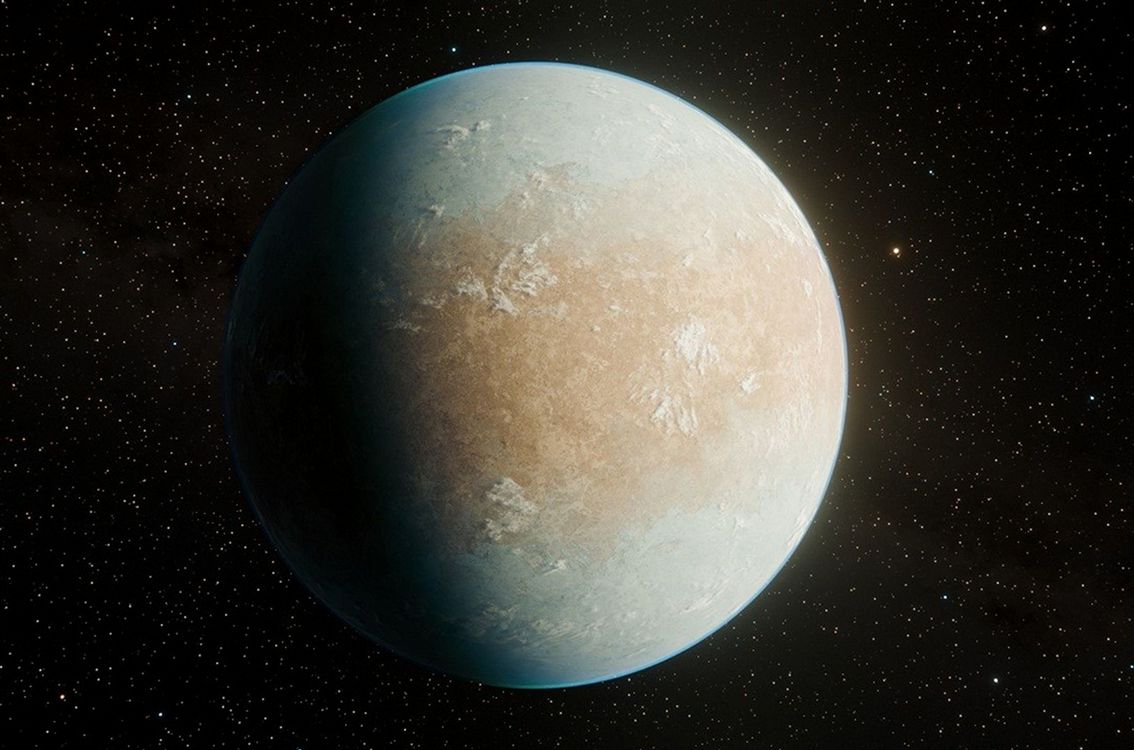
This planet is called
#HD137010b
https://www.goodnewsnetwork.org/citizen-scientist-spots-earth-like-planet-now-astrophysicists-will-focus-most-powerful-telescopes-on-it/