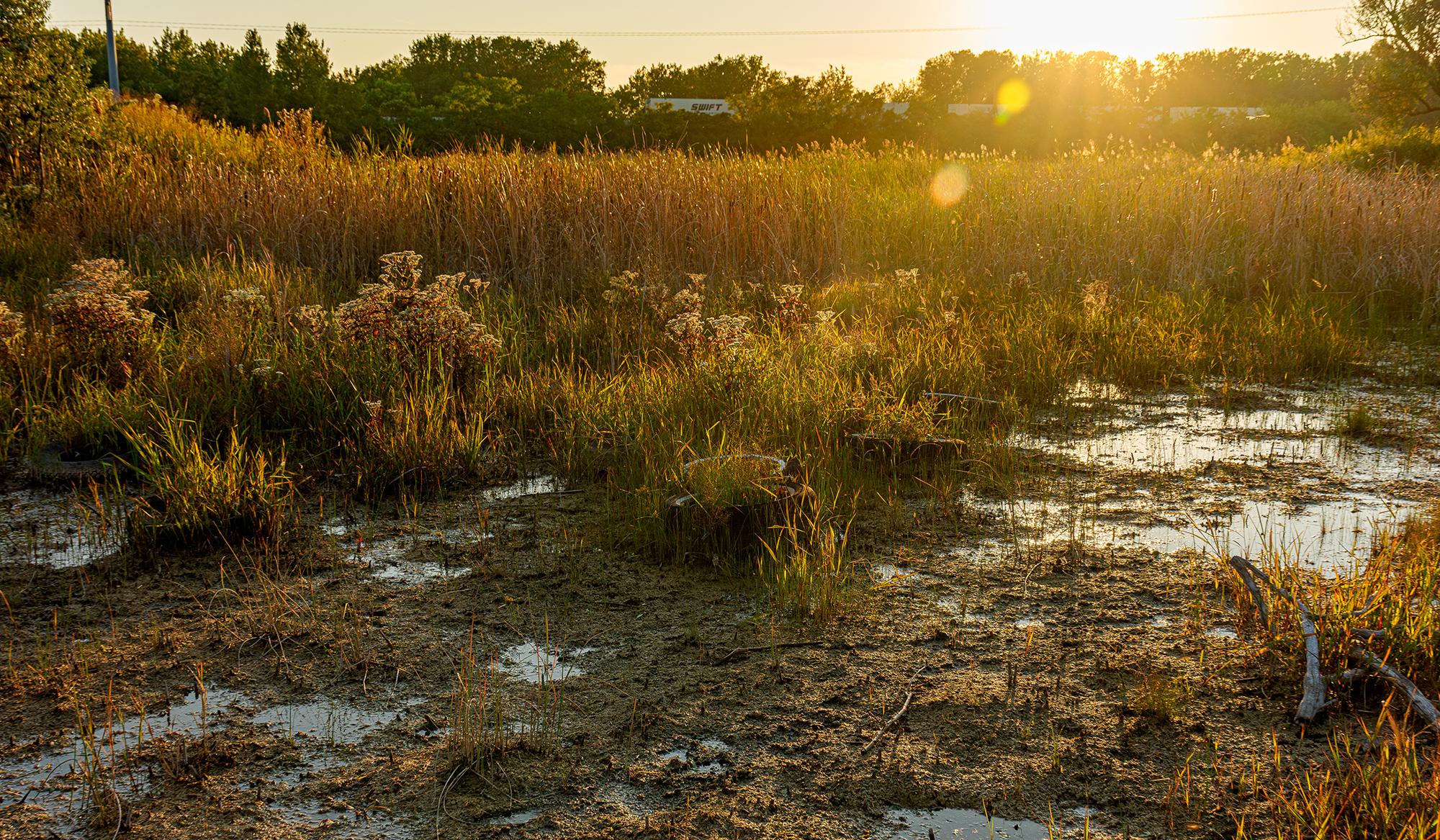
Here's a tale of how nature triumphs in the end.
Steel mills dumped molten slag in parts of Chicago and nearby areas. The slag hardened in layers up to 5 meters deep. These places became barren wastelands. Other industries dumped hot ash and cinders there.
But eventually the steel mills closed.
The deep layers of hard, toxic material were not friendly to plants. Cottonwoods are usually 30 meters tall or more. In the slag fields, stunted cottonwoods grow to just 2 meters.
But rare species that could handle these conditions began to thrive. The lakeside daisy, a federally threatened species lost to Illinois for decades, turned out to grow taller on slag than on topsoil! The capitate spike-rush, last recorded in Illinois in 1894 and considered locally extinct, was rediscovered growing on slag.
And more! Native prairie grasses like little bluestem. Native milkweeds. Even tiny white orchids called sphinx ladies' tresses.
A team of women ecologists began studying these unusual landscapes. They call themselves the Slag Queens.
(1/2)