
Over the past few years, the number of #satellite launches has skyrocketed.
There are now nearly 15 000 active #satellites in orbit around the Earth, most of them part of mega-constellations in which each satellite has a service life of only a few years.
New satellites must be quickly launched as replacements. To avoid leaving old, dead satellites in Earth’s already-crowded low orbits, most satellite operators deliberately de-orbit them into Earth’s upper atmosphere.
That approach is now being taken to a vastly larger scale and there are implications for Earth’s #climate and #atmosphere.
Rocket launches already contribute to climate change and #ozone depletion.
Scaling them up to deploy a million aircraft-sized satellites would push upper-atmosphere heating and ozone loss far beyond previous estimates, with the steady burn-up of dead satellites compounding the impacts.
This is just a fraction of what is to come if planned mega-constellations go ahead. Operators worldwide have already asked for a combined total of over one million satellites.
The very smallest particles, finer than a human hair, can stay suspended in the atmosphere for years, contributing to ozone depletion and climate change.
A million satellites could mean that a teragram of alumina accumulates in the upper atmosphere – enough, alongside launch emissions, to significantly alter atmospheric chemistry and heating in dramatic ways we do not yet understand.
There is no public mandate for a single company in one country to make changes on that scale to the planet’s atmosphere.
#space #astronomy
https://theconversation.com/a-new-space-race-could-turn-our-atmosphere-into-a-crematorium-for-satellites-276366
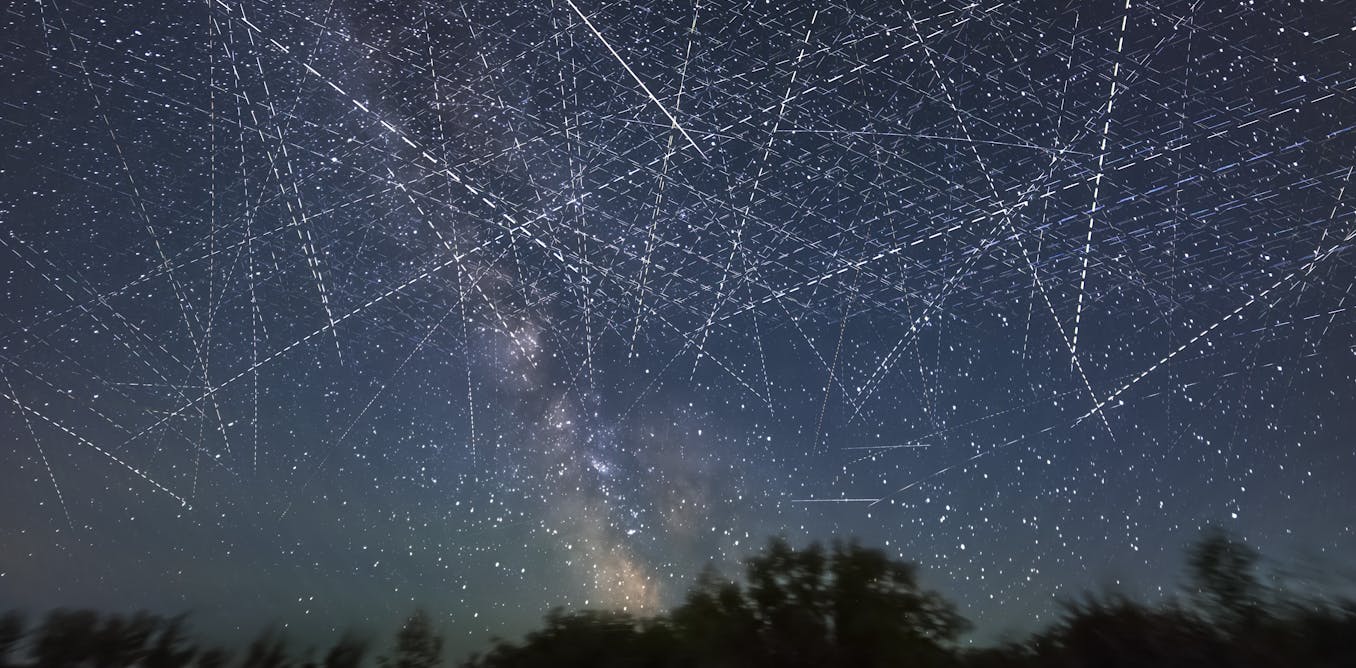
A new space race could turn our atmosphere into a ‘crematorium for satellites’
Planned ‘megaconstellations’ of satellites could cause unforeseen harm to the ozone layer and climate systems. Global regulation is needed before it’s too late.
theconversation.com · The Conversation
Link author:  The Conversation AU + NZ@theconversationau@mastodon.social