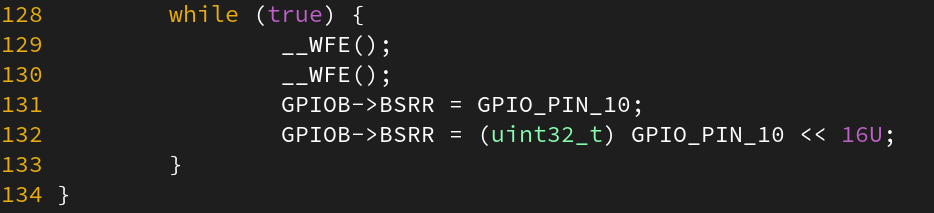
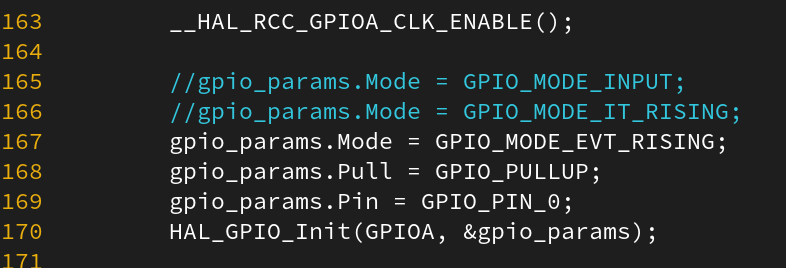
Keep optimizing IRQ latency on the STM32H743 @ 480 MHz. I decided to try an event loop using the WFE instruction instead of IRQs, and I managed to get 60 ns input-to-output latency. I suspect this is the best possible latency. Latency did not improve by abusing QSPI controller to generate a write request (in fact it slightly degraded), even if the QSPI controller is physically close to the CPU. Clearly, passively monitoring signals is not the way to go for bus emulation. Perhaps the solution is predicting the clock before it even arrives, by internally generating a phase-shifted version of it. #electronics #STM32
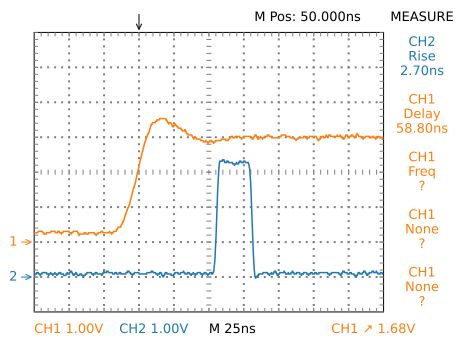
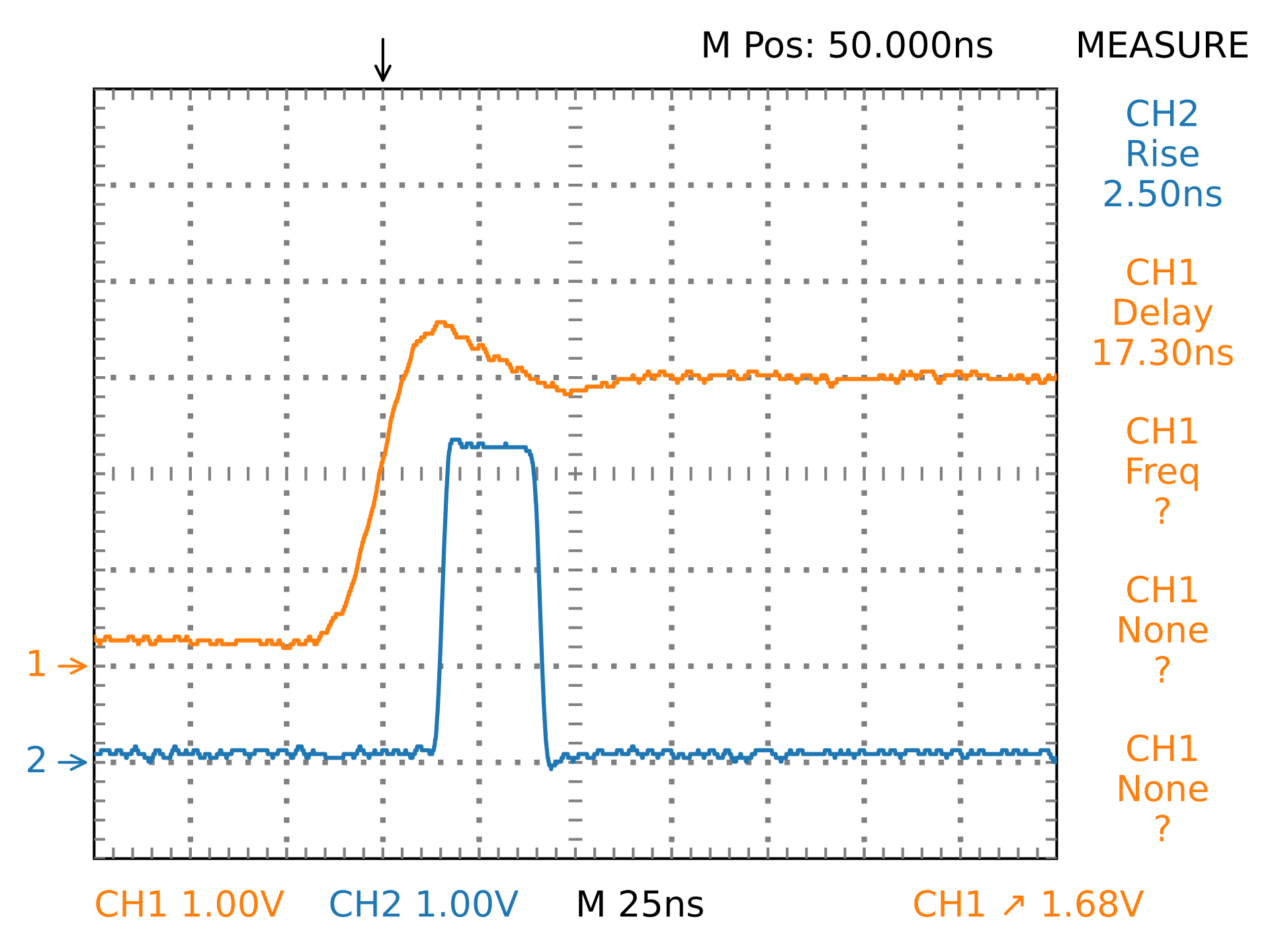
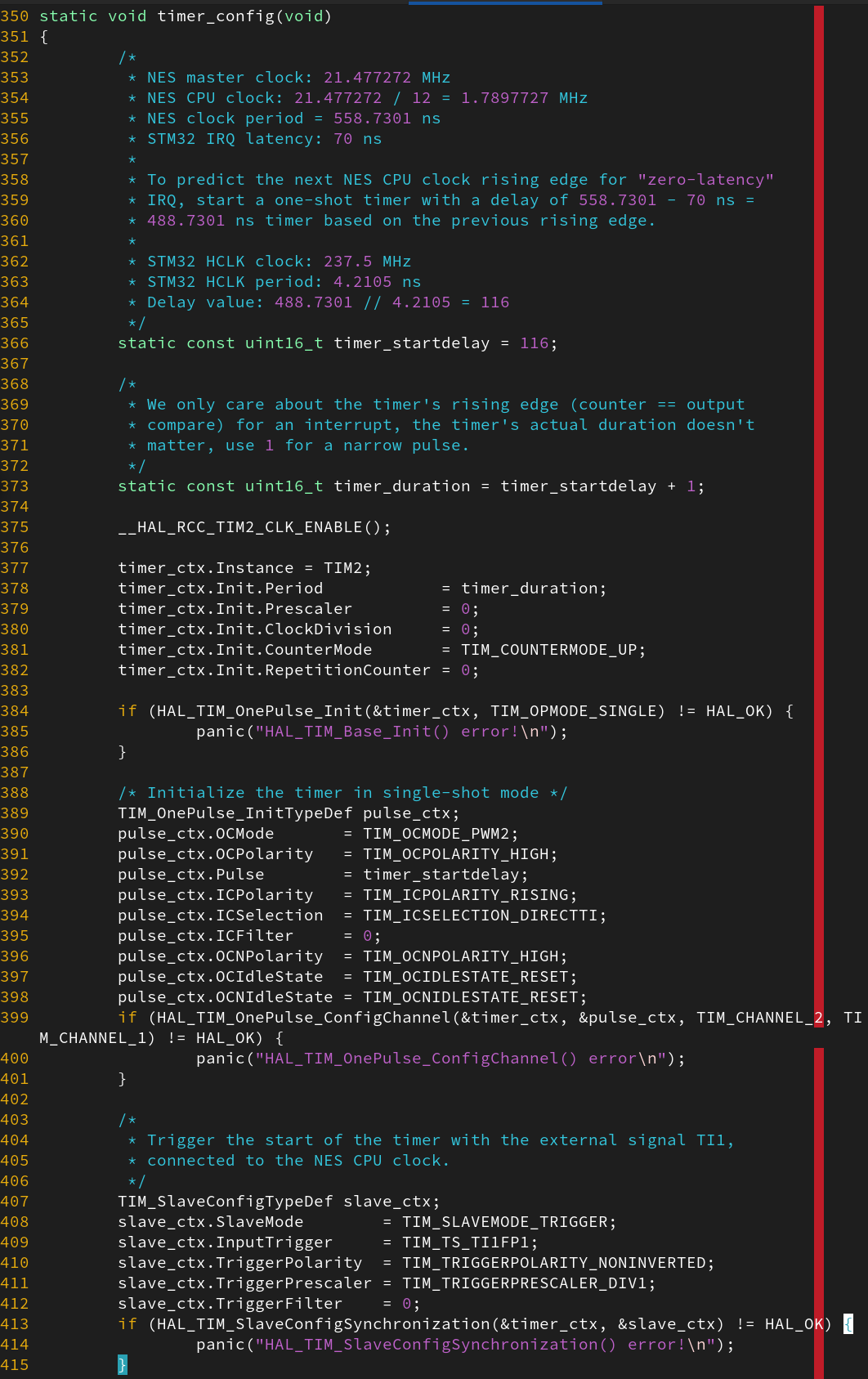
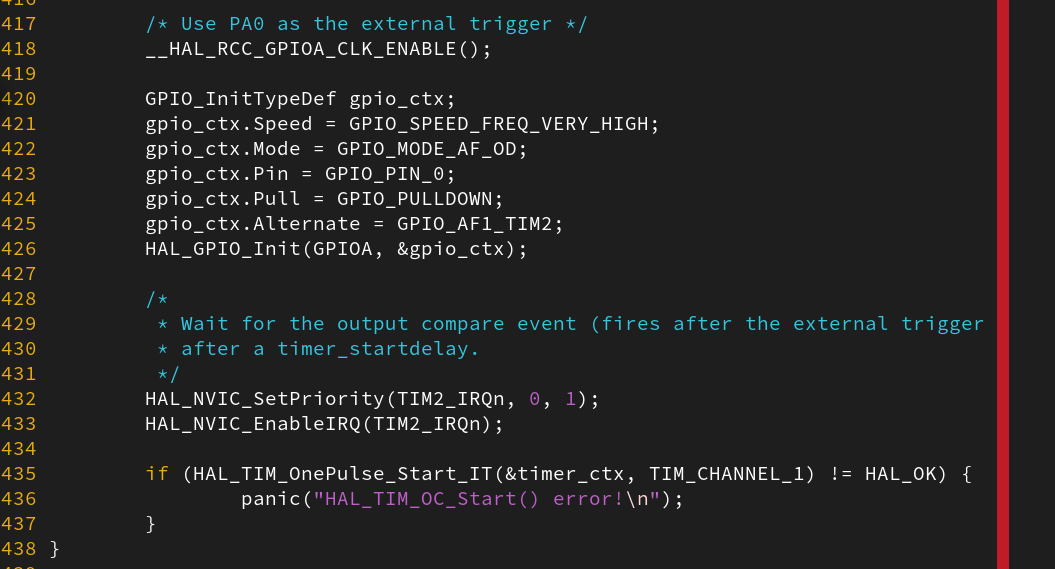
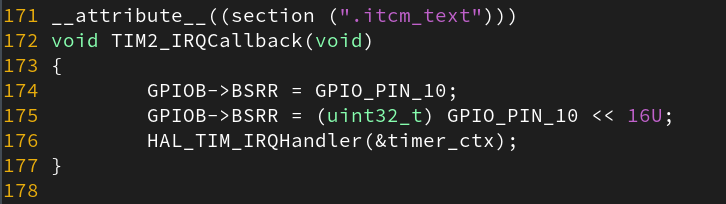
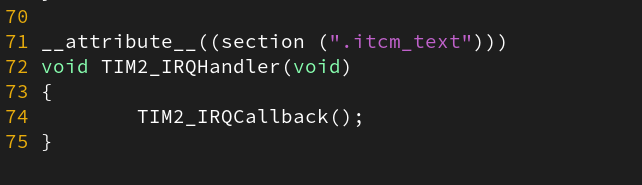
Keep optimizing IRQ latency on the STM32H743 @ 480 MHz. My "zero-latency IRQ" idea is a success, now I'm getting a 17.30 ns "effective" latency! Upon receiving every rising edge of the clock, the hardware immediately starts a timer that fires after a programmed delay, calculated to be slightly before the next clock rising edge. This way, the firmware is triggered from recovered, phase-shifted version of the clock, a little bit like how analog NTSC TVs got their H/VSYNC. Interrupt latency is completely eliminated for all but the first clock cycle (which is also predictable with pre-enabled outputs, since it's always the reset vector) Perfect bus emulation starts looking feasible. #electronics #STM32
If you have a fediverse account, you can quote this note from your own instance. Search https://mk.absturztau.be/notes/ajzivgg0k83q01b1 on your instance and quote it. (Note that quoting is not supported in Mastodon.)