“In early 2026, Jared Kushner reintroduced his project known as “New Gaza”, presenting it as a comprehensive economic vision aimed at transforming the Gaza Strip from a collapsed economy to a fully functioning market economy. The plan envisages investments of between $25 billion and $30 billion, including the development of public infrastructure and services. Over the medium term, it aims to raise Gaza’s GDP to over $10 billion by 2035 and create over 500,000 jobs, promising what it describes as “full employment”.
However, when these figures are examined in light of the unprecedented destruction caused by the war, they raise fundamental questions. According to UN and World Bank estimates, the cost of rebuilding Gaza exceeds $70 billion, more than double the proposed plan. This includes the removal of over 60 million tons of rubble, the reconstruction of hundreds of thousands of housing units, and the repair of water, electricity, and sewage networks, as well as the rehabilitation of hospitals and schools, many of which have been rendered inoperable due to direct targeting or the disruption of supply chains and shortages of fuel and medical supplies.
Moreover, the human and institutional catastrophe has been particularly severe. According to local and Israeli sources and UN reports, over 70,000-80% of hospitals and health centers have been partially or completely destroyed, either by direct targeting or due to the collapse of supply chains and fuel and medical supplies shortages. Over 85% of schools have been damaged, along with nearly all universities. This has disrupted education for hundreds of thousands of students and threatened an entire generation’s right to education and knowledge.
Beyond the human and institutional devastation, the issue of prisoners and detainees has emerged as one of the most complex aspects of the humanitarian crisis. According to Palestinian and Israeli human rights organizations and UN reports, tens of thousands of Palestinians have been arrested since the start of the war, while over 10,000 prisoners and detainees are held in Israeli prisons and detention centers, including women and children, along with thousands held under the pretext of “administrative detention” or as “unlawful combatants”. This has been accompanied by extensive documentation of serious violations, including denial of legal safeguards, ill-treatment, and enforced disappearances, which add a heavy legal and human rights dimension to any discussion of “the day after” or reconstruction.
The gap between the scale of the catastrophe and the proposed funding does not represent a technical detail, but rather reflects a fundamental misreading of reality. While the plan treats Gaza as a struggling developmental project in need of capital injections and investments, field indicators in early 2026 reveal a near-paralyzed economy:
An over 80% contraction in GDP, over 80% unemployment, and extreme poverty affecting nearly 90% of the population, alongside widespread destruction of the productive base in agriculture, industry, and services.
More importantly, the plan assumes the possibility of launching an economic growth cycle in an environment still subject to strict occupation measures. Despite talk of “future” logistics corridors, ports, and airports, movement of goods and people remains effectively hostage to a complex system of external controls, limited quotas, and inspection and control procedures that render such movement unstable and insufficient to restart the economy.
The opening of the crossing, in its current form, does not mean free trade or a normal flow of raw materials or exports. Instead, it is managed as a temporary exception that can be disrupted or restricted at any moment. In this context, talk of large-scale private investments, industrial zones, data centers, and coastal tourism is closer to a theoretical concept disconnected from actual market conditions.
In this context, one of the most serious problems in the “New Gaza” project is the linkage of reconstruction to security arrangements. This linkage does not transform reconstruction into a human right or an international obligation, but rather into a conditional political pressure tool that can be disrupted or halted at any moment. Gaza’s experience over the past years has shown that any economic improvement linked to the security equation remains fragile and temporary, subject to unilateral assessments unrelated to the needs of the population. More dangerously, this approach reproduces the logic of “quiet in exchange for reconstruction,” where the lives of more than two million people are managed as a security issue rather than a matter of rights and sovereignty, and reconstruction is stripped of its developmental content to become a tool for crisis management rather than resolution.
Here, the fundamental dilemma of the “New Gaza” project becomes clear:
The plan separates the economy from its political roots and treats Gaza as a developmental problem that can be solved through investment, while the reality of the sector confirms that it is primarily a political issue resulting from siege, occupation, and the absence of sovereignty.
An economy without freedom of movement, reconstruction without control over resources, and investment without independent guarantees all remain unsustainable.
In conclusion, a comparison between the project’s promises and the realities on the ground reveals that the gap is not just in numbers, but also in understanding. Gaza does not only need billions of dollars, but also a fundamental change in the political conditions that have enabled destruction and recurring crises. Without this, “New Gaza” will remain an attractive headline at international conferences and a project suspended between the pages of plans… and the reality of the situation.”
By Dr. Samir Mustafa Abu Madlala
Lecturer at Al-Azhar University – Gaza
Member of the General Secretariat of the Union of Palestinian Economists
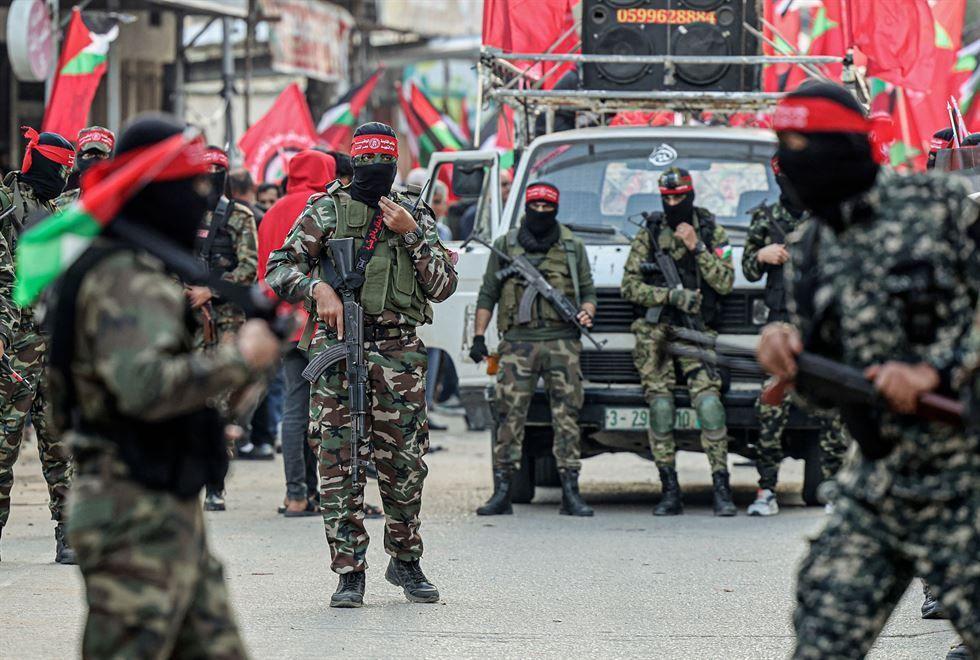
Member of the Political Bureau of the Democratic Front for the Liberation of Palestine










 に逃げ込んだ自分から見るとだいぶ地獄絵図に見える…
 @3/23(日)
 東京オフ主催








 になっておる
 힐씨
힐씨










 しゅいろ
しゅいろ


 珠野うみか
珠野うみか 





 시오
시오



 🕊️
🕊️ 
 雨宮凪沙/nagiko