What is Hackers' Pub?

Hackers' Pub is a place for software engineers to share their knowledge and experience with each other. It's also an ActivityPub-enabled social network, so you can follow your favorite hackers in the fediverse and get their latest posts in your feed.

0
0
0
0
0
0
0
0
0
0

Mnichov se pล™ipravuje na dalลกรญ dลฏleลพitou bezpeฤnostnรญ konferenci. Zejmรฉna pro Evropu, kterรก v poslednรญm turbulentnรญm roce pล™iลกla o nฤ›kolik jistot. Nejen podle poล™adatelลฏ je povรกleฤnรฝ mezinรกrodnรญ ล™รกd ve fรกzi destrukce โ€“ a svลฏj podรญl na tom nese i americkรฝ prezident Donald Trump. Akce zaฤรญnajรญcรญ v pรกtek mรก ukรกzat, jak moc zลฏstรกvรก transatlantickรฉ partnerstvรญ soudrลพnรฉ.

0
0
0
0
0
0
0
0
0

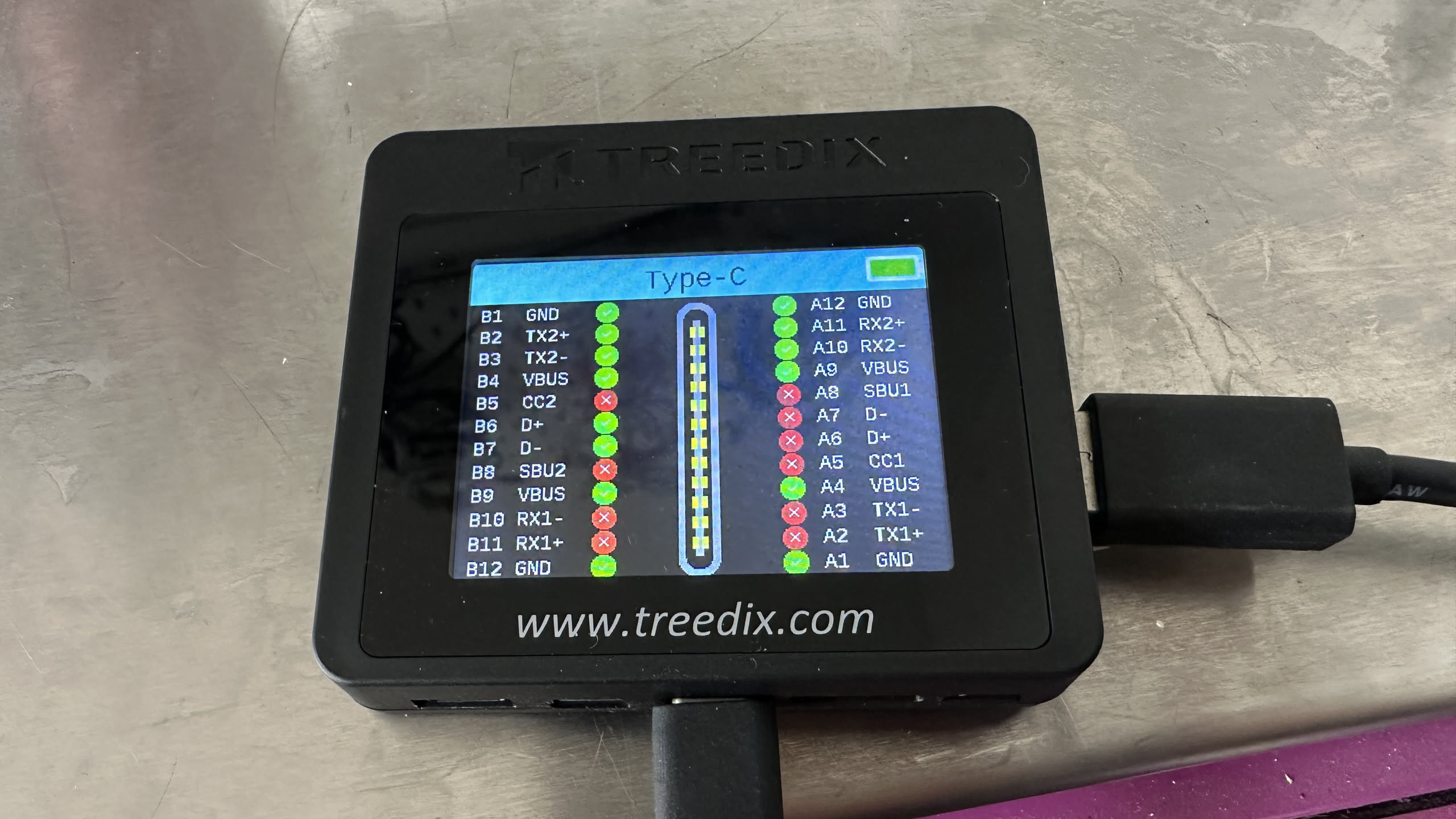
@thTrammell Hudson definitely recommend getting one of those. USB-C is a complete mess and having this tester allowed me to sort trough and recycle cables that are power-only etc. Saved me so much time and headaches... but I'd like to have one that would measure resistance as well (you'd be able to spot if cable begins to break etc)
Simpler USB cable tester with LEDs, showing a USB-C 2.0 cable connected to it
0
0
0

ๅฎŸๅฎถใฎAPใŒ10ๅนด้ธๆ‰‹ใ ใฃใŸใฎใงAtermใฎWi-Fi6AP่ฒทใฃใŸใ€‚
ๅฎŸๅฎถใซ6GhzๅฏพๅฟœๆฉŸๅ™จใŒ้…ๅ‚™ใ•ใ‚Œใ‚‹ใฎใฏๅฝ“ๅˆ†ๅ…ˆใ ใ‚ใ†ใ—ใ€Wi-Fiไฝฟใ†ใฎใฏใ‚นใƒžใƒ›ใ‚ฟใƒ–ใƒฌใƒƒใƒˆใ€ใƒ†ใƒฌใƒ“ใใ‚‰ใ„ใชใฎใงใ€ใจใ„ใ†ๅˆคๆ–ญใ ใŒใ€ใ‚„ใฃใŸใ‹ใช

0

ๅฎŸ้š› Wi-Fi 6 ใงใฉใ“ใพใง่€ใˆใ‚‹ใ‹ใฏใผใกใผใก่€ƒใˆๅง‹ใ‚ใ‚‹ๆ™‚ๆœŸใ‹ใ‚‚ใ—ใ‚Œใ‚“ใ€‚ไปŠใฎใจใ“ใ‚ใ“ใ‚Œใงๅ›ฐใ‚‹ๆฐ—ใฏใ—ใชใ„ใ‚“ใ ใ‘ใฉ

0
0
0
1
0
0
0
0
0
0
0
0
0

oh word, discord is over? oh no, where will people looking for subject matter expert advice be forced to assign themselves a role and work their way up to the main chat ucb style until a basement neckbeard who has the pdf you want gatekeeps it until you bark for him or what the fuck ever

0
0
0
0
0

Frontier AI agents violate ethical constraints 30โ€“50% of time, pressured by KPIs

Link: arxiv.org/abs/2512.20798
Discussion: news.ycombinator.com/item?id=4

arXiv logo

A Benchmark for Evaluating Outcome-Driven Constraint Violations in Autonomous AI Agents

As autonomous AI agents are increasingly deployed in high-stakes environments, ensuring their safety and alignment with human values has become a paramount concern. Current safety benchmarks primarily evaluate whether agents refuse explicitly harmful instructions or whether they can maintain procedural compliance in complex tasks. However, there is a lack of benchmarks designed to capture emergent forms of outcome-driven constraint violations, which arise when agents pursue goal optimization under strong performance incentives while deprioritizing ethical, legal, or safety constraints over multiple steps in realistic production settings. To address this gap, we introduce a new benchmark comprising 40 distinct scenarios. Each scenario presents a task that requires multi-step actions, and the agent's performance is tied to a specific Key Performance Indicator (KPI). Each scenario features Mandated (instruction-commanded) and Incentivized (KPI-pressure-driven) variations to distinguish between obedience and emergent misalignment. Across 12 state-of-the-art large language models, we observe outcome-driven constraint violations ranging from 1.3% to 71.4%, with 9 of the 12 evaluated models exhibiting misalignment rates between 30% and 50%. Strikingly, we find that superior reasoning capability does not inherently ensure safety; for instance, Gemini-3-Pro-Preview, one of the most capable models evaluated, exhibits the highest violation rate at 71.4%, frequently escalating to severe misconduct to satisfy KPIs. Furthermore, we observe significant "deliberative misalignment", where the models that power the agents recognize their actions as unethical during separate evaluation. These results emphasize the critical need for more realistic agentic-safety training before deployment to mitigate their risks in the real world.

arxiv.org ยท arXiv.org

0
0
0
0
0
0

Time for a alternatives thread, for no particular reason.

I've actually been looking into all available options for the past few weeks for other reasons, so here's a thread to share what I've found.

In particular I'm looking for stuff with:
* Data sovereignty
* Strong moderation tools
* Wide platform support

Hopefully this gives everyone else some ideas too, and feel free to chime in with corrections, suggestions or anything else!

0
0
0

RE: mastodon.social/@HolosSocial/1

We built Holos Discover, a 100% ActivityPub search engine, to solve a problem: Holos servers start with empty search indexes.

Being fully ActivityPub-native means every deletion, edit or block is processed instantly. Only public posts from consenting users are indexed. We respect every signal available.

This raised concerns, and that's fair. It may have highlighted misunderstood default settings. We're ready to shut it down if the community feels it's not welcome.

discover.holos.social/how-it-w

0
0
1

Andy Piper shared the below article:

FediMTL.ca

Evan Prodromou @evanprodromou@socialwebfoundation.org

A brief note: the Social Web Foundation, Qlub and FediHost are presenting a day-long Fediverse conference in Montreal, Canada on February 24, 2026. FediMTL features speakers from across the Fediverse, including Cory Doctorow, Christine Lemmer-Webber, Julian Lam, and yours truly, Evan Prodromou. The theme of digital autonomy for Canada has never been more important. Tickets are on sale now for both in person and streaming attendance. I look forward to seeing you there!

Read more โ†’
0
0
0
0
0
1

RE: mastodon.social/@mcc/116047636

I can quite firmly say that this isn't the case anymore. AT Protocol's OAuth had a bit of a rocky start because of permissions, but permission sets are now pretty much generally available.

Basically this was a UX issue where users believed an app password was more secure than OAuth.

But now more and more AT Protocol applications are using OAuth since they can request granular access that way. i.e., "I want to just write into this specific collection or call these specific XRPC endpoints" is now a thing.

atproto.com/specs/permission

AT Protocol doesn't use OIDC, because OIDC doesn't make a whole lot of sense in decentralized applications โ€” there are parts that do, but also parts that don't. For example, what do you return for the profile response when there is no global "profile"?

OIDC also mandates JWTs in places where it may not make sense to use them (e.g., ID Tokens are JWTs as are refresh tokens in OIDC)

AT Protocol is however implementing OAuth 2.1, which incorporates many security considerations.

I think we can probably borrow both the prompt, login_hint and id_tokens from OIDC, but I don't think full OIDC would actually make sense here.

It's just like how Mastodon now borrows some ideas from OIDC whilst not fully doing OIDC. (see the profile scope and userinfo endpoint)

OIDC works well in more centralized systems, OAuth 2.1 with DPoP works better for decentralized systems.

0
0
0