What is Hackers' Pub?

Hackers' Pub is a place for software engineers to share their knowledge and experience with each other. It's also an ActivityPub-enabled social network, so you can follow your favorite hackers in the fediverse and get their latest posts in your feed.

0
0
0
0
0
0
0
0
0
0
2
0
0
0
0
0
0
1
0

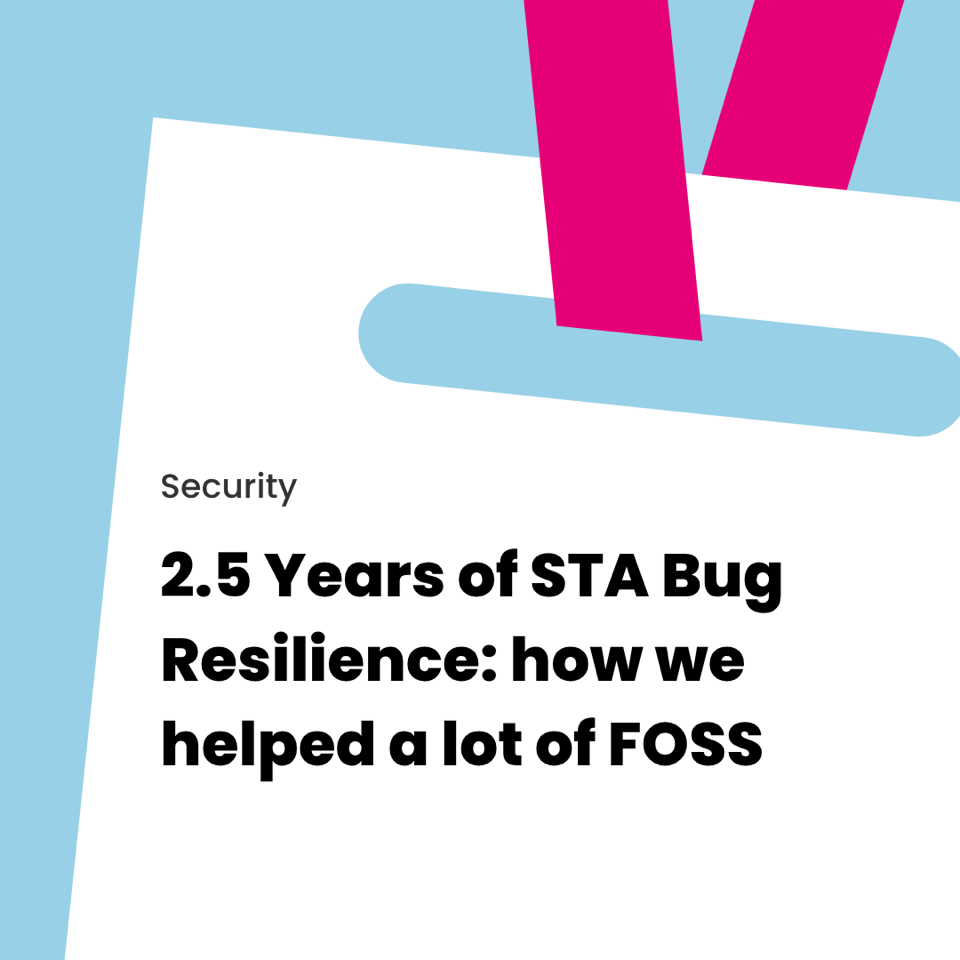
We’ve got another reason not to miss @FOSSBackstage this year — 16-17 March 2026, Berlin ✨

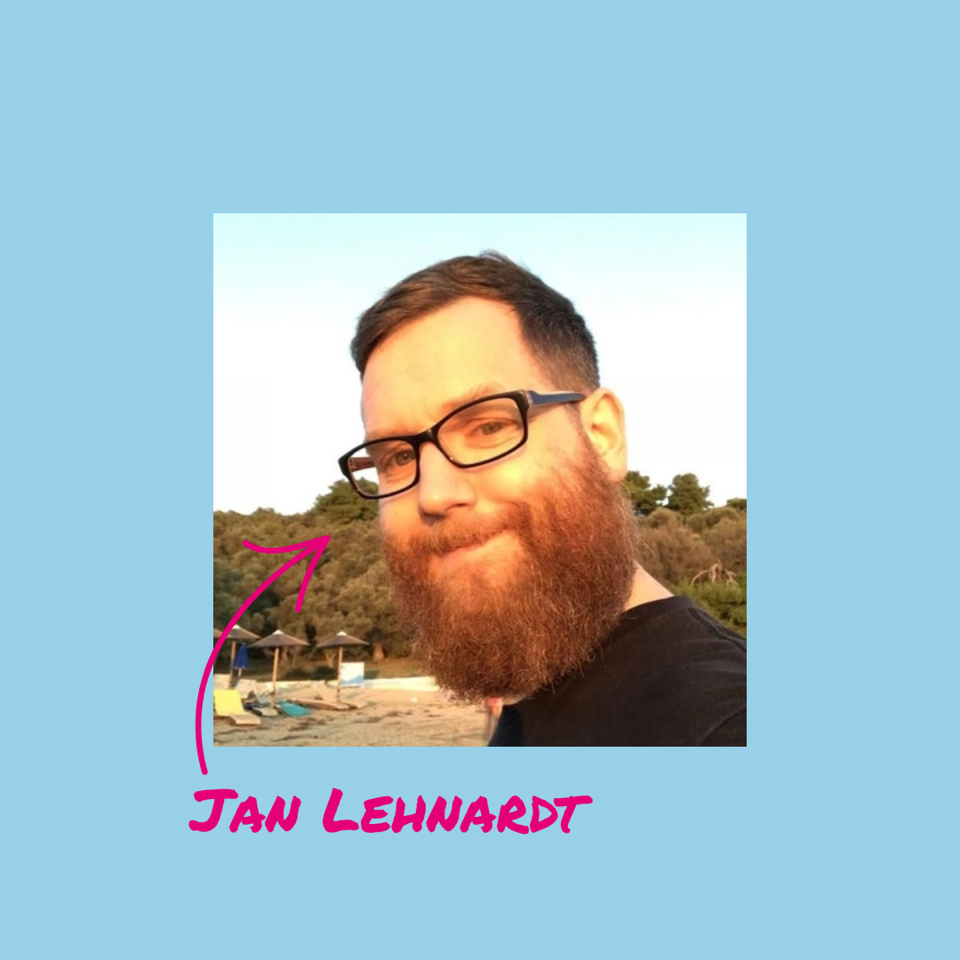
@janlJan Lehnardt :couchdb: will recap highlights from 2.5 years of contributing to tech’s favourite FOSS projects through @sovtechfundSovereign Tech Agency’s Tech Resiliency program.

Join us on day 1 of the conference to learn what really keeps open source projects strong and safe 🔒

Session: 26.foss-backstage.de/session/2

🎫 Tickets: 26.foss-backstage.de/tickets

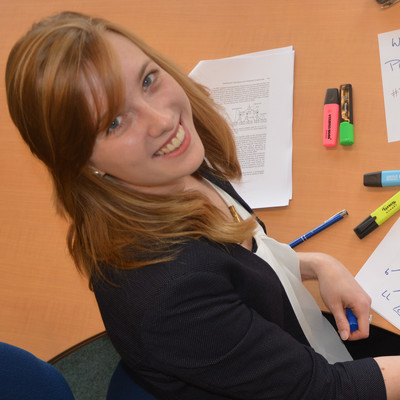
Jan Lehnardt from the Neighbourhoodie team will present “2.5 Years of STA Bug Resilience: how we helped a lot of FOSS” at FOSS Backstage this year. If you’re curious to learn more about what the Sovereign Tech Agency’s support has meant for the open source ecosystem, and what we’ve learned as the official implementation partner on the way, grab your ticket and join us there. In this photograph, Jan Lehnardt smiles at us from a beach with lush greenery in the background. Jan has been contributing to open source projects for over 15 years and has put that breadth of knowledge to good use supporting projects including PHP, systemd, Log4j and more through the Tech Resilience program. FOSS Backstage takes place in Berlin from 16-17 March 2026. You can join in person or online, so don’t miss out — grab your ticket and we’ll catch you there.
0
0
0

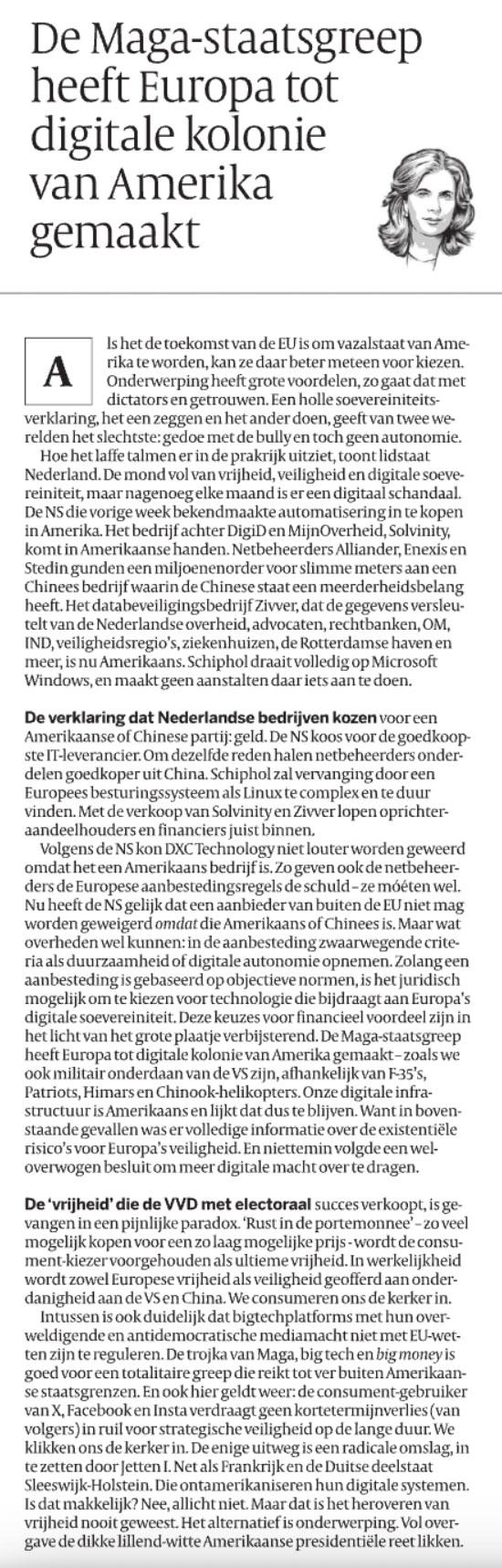
Marcia Luyten: De 'vrijheid' die de VVD met electoraal succes verkoopt, is gevangen in een pijnlijke paradox. 'Rust in de portemonnee' - zo veel mogelijk kopen voor een zo laag mogelijke prijs - wordt de consument-kiezer voorgehouden als ultieme vrijheid.
In werkelijkheid wordt zowel Europese vrijheid als veiligheid geofferd aan onderdanigheid aan de VS en China.
Volkskrant

0
0
0
1
1
0
0
0
0
0
0
1
0
0
0
1
1
0

Windows 11 26H1은 마소가 커널 재작성에 아직 자신이 없어서 분리 발매하는 것 같고요

현재 빌드는 그럼 이렇게 되네요
- [out of svc] Windows 10 "Release" Release 23H2
- Windows 11 "Release" Release 25H2
- Windows 11 "NewCore" Release 26H1
- Windows 11 "Insiders Release Preview" Release 25H2
- Windows 11 "Insiders Beta" Release 25H2
- Windows 11 "Insiders Dev" Release 25H2
- Windows vNext "Canary" Release 26H1

1
0
1
0
0
0
0

So this is Fireweed.

It is a distributed forum / social protocol thing I'm making built around cryptographic identity instead of accounts. It is a proof-of-concept in essence, to prove it can be done.

No usernames as authority. No central database as truth. Just local cryptographic identity. In the future I plan to allow attestation via signing a nonce you can put on a site or something.

Anyway.

Your identity is a keypair. That’s it. That's the pitch. Everything else revolves around that.

🧵

How it works:

You generate a root keypair (Ed25519, small, fast, modern elliptic curve, supported by almost every browser).

That key is:

  • Your identity.
  • Your authority.
  • Your signature stamp.

If you lose it, you’re done. There is no "forgot password." Eventually you will be able to export your keypair and save it somewhere, but you absolutely need this keypair to use it.

This is not far off from how SSH works, actually.

The root never touches the Internet, at least the private key doesn't. Or ideally, shouldn't.

It is encrypted at-rest in your browser and only loaded into memory when needed, decrypted via a password. It's... not perfect, because browser-based crypto is not perfect, but it's irretrievable in direct form.

This is brutal, yes, but it is clean. Also, if you destroy the key? No one can cryptographically prove it was you.

Anyways.

The root key signs:

  • Device keys
  • Identity metadata
  • Potential revocations
  • Anything that defines "you"

Obviously, posting from your root key directly would be clunky and having a lot of key material around you really don't want widely duplicated

Instead: the root key generates and signs a device key.

Device key is what signs posts, preferences updates, etc..

Each device key is:

  • Separately revocable
  • Linked to root
  • Explicitly authorized
  • Has capabilities attached like posting and preferences updates

If your laptop gets owned? You revoke that device key. The root signs a revocation. Network sees the revocation. That device stops being valid. Posts and preferences updates from it are ignored.

0
0

子供がなりたい職業1位がイラストレーターだって!

1日1枚描いて、3年で1000枚くらい描けばようやくスタートラインだ!最初は誰にも見つからない中、1日何十枚も出せるAI絵よりも魅力的な絵を1人で黙々と毎日何時間も描き続けて、数少ない仕事も10年・20年描いてるプロと取り合いだ!!がんばってね!

1

If you're curious what this is:

It's a little implementation of a distributed social media system, for now using a local server but will use OrbitDB in the future once I'm more confident in it.

It deserves a whole-ass writeup, but I honestly consider it more proof-of-concept than I do a real thing I feel comfortable people using right now.

So this is Fireweed.

It is a distributed forum / social protocol thing I'm making built around cryptographic identity instead of accounts. It is a proof-of-concept in essence, to prove it can be done.

No usernames as authority. No central database as truth. Just local cryptographic identity. In the future I plan to allow attestation via signing a nonce you can put on a site or something.

Anyway.

Your identity is a keypair. That’s it. That's the pitch. Everything else revolves around that.

🧵

0
0
0

2月17日は​:gacha:​​:no:​​:5000t_niti:​だそうです​:ameownod:
こういうのは大体当たらないので、とりあえず何か1つ欲しいなーくらいの気持ちでやってます
:ablobcatnodmeltcry:

1
0
0
1
1
0
0
2

how the fuck do you get 10 years of experience in IT and software without knowing anything??

imagine you get an electritian for your house electrical work and the fucker asks ChatGPT how electricity works and how/where to put cables n shit.

Can't make that shit up

0
1
1