What is Hackers' Pub?

Hackers' Pub is a place for software engineers to share their knowledge and experience with each other. It's also an ActivityPub-enabled social network, so you can follow your favorite hackers in the fediverse and get their latest posts in your feed.

1
1
0
1
1

Another post on the instagram of Tanya Klowden and myself, this time comparing the many ways cartographers have projected the (mostly) spherical Earth onto flat planes. No planar projection can faithfully reproduce *all* the geometric features of a sphere, so each projection is a compromise; but some projections are still preferred over others for specific applications. instagram.com/p/DVC9SvxkXDs

Cosmic Distance Ladder on Instagram: "The Earth is round, but maps (or computer and phone screens) are flat. So, we have to apply a projection to map the round Earth onto a flat surface. Ideally, we would like this projection to have three desirable properties: • Area-preserving. The projection should not stretch one part of the Earth to look larger than another part that actually has the same surface area. • Shape-preserving.(Mathematicians call this the “angle-preserving” or “conformal” property.) The projection should not squish or stretch the shape of an object: a round landmass should not become elliptical, for instance. • Grid lines. Lines of latitude should be horizontal; and lines of longitude (also known as “meridians”) should be vertical. Unfortunately, these three properties form a trilemma: any given projection can have two of these three properties, but not all three at once. The Mercator projection is the most famous. It is shape-preserving and has grid lines, making it particularly suitable for navigation. But it distorts area like crazy, making Greenland for instance look almost three times larger than Australia by area, when in fact it is over three times smaller. The Gall-Peters projection removes the area distortion, and keeps the grid lines - but at the cost of totally messing up shapes. Africa is way too tall and skinny; Canada too short and wide. The Mollweide projection tries its best to preserve both area and shape, and gives up entirely on straight grid lines. The relationship between area and shape is in fact fundamentally different for spheres and for planes, so no projection can preserve both of them perfectly; but Mollweide comes the closest. Can’t choose? Why not try the Winkel Tripel projection, which compromises by being only slightly bad at preserving areas and shapes, or keeping the grid-lines straight. Everything in this projection is slightly imperfect, but it tries to balance its faults evenly. There are an infinite number of possible projections. What projection is your favorite? #DistanceLadder #geography #MapProjections #3DGeometry #topology #mathematics #WhyNobodyLikesMercatorProjections"

27 likes, 1 comments - cosmic_distance_ladder on February 21, 2026: "The Earth is round, but maps (or computer and phone screens) are flat. So, we have to apply a projection to map the round Earth onto a flat surface. Ideally, we would like this projection to have three desirable properties: • Area-preserving. The projection should not stretch one part of the Earth to look larger than another part that actually has the same surface area. • Shape-preserving.(Mathematicians call this the “angle-preserving” or “conformal” property.) The projection should not squish or stretch the shape of an object: a round landmass should not become elliptical, for instance. • Grid lines. Lines of latitude should be horizontal; and lines of longitude (also known as “meridians”) should be vertical. Unfortunately, these three properties form a trilemma: any given projection can have two of these three properties, but not all three at once. The Mercator projection is the most famous. It is shape-preserving and has grid lines, making it particularly suitable for navigation. But it distorts area like crazy, making Greenland for instance look almost three times larger than Australia by area, when in fact it is over three times smaller. The Gall-Peters projection removes the area distortion, and keeps the grid lines - but at the cost of totally messing up shapes. Africa is way too tall and skinny; Canada too short and wide. The Mollweide projection tries its best to preserve both area and shape, and gives up entirely on straight grid lines. The relationship between area and shape is in fact fundamentally different for spheres and for planes, so no projection can preserve both of them perfectly; but Mollweide comes the closest. Can’t choose? Why not try the Winkel Tripel projection, which compromises by being only slightly bad at preserving areas and shapes, or keeping the grid-lines straight. Everything in this projection is slightly imperfect, but it tries to balance its faults evenly. There are an infinite number of possible projections. What projection is your favorite? #DistanceLadder #geography #MapProjections #3DGeometry #topology #mathematics #WhyNobodyLikesMercatorProjections".

www.instagram.com · Instagram

0
1
0
9
0

〜カワセミジンクスの歴史〜

初回(埼玉県巾着田)
D850+AF-S NIKKOR 70-200mm f/4G ED VR
初のカワセミ遭遇。最も好条件。
f/2.8とテレコンバータの重要性を痛感。

2回目(仕事帰りに近所の河原にて)
iPhone 12 mini
この世にはガチの無理ゲーがあることを理解する。

3回目(東京都葛西臨海公園)
Nikon Zf + Zoom NIKKOR.C Auto 43〜86mm F3.5
歴史的な玉でも太刀打ち出来ない存在。それがカワセミ。
なお、歴史的とは世界初の実用廉価標準ズームレンズであるという部分。

4回目(東京都新宿御苑) ←New!
Nikon Zf + NIKKOR-Q Auto 13.5cm F3.5
新宿にカワセミはいるが、手元にはレンズがない。
600mmは標準レンズの意味を理解する。

1
1
1
0
0
0
17
0
0
0
0
26
0
0
0
0

tl;dr: too long; didn't read

ai;dr: contains AI slop; didn't read

av;dr: requested age verification; didn't read

451;dr: content unavailable for legal reasons; didn't read

js;dr: page required JavaScript; didn't read

ps;dr: problematic site; didn't read

dr;dr: I feel like a pair of curtains. Pull yourself together.

0
0
0
1
0
1
0
0
0
3
0
0
0
0
0
0
@evanEvan Prodromou @gugurumbeVivien (toujours dans le déni) i know what caching is, thanks. in fact, my current project is building one that's tailor made for solving the activitypub thundering herd problem (codeberg.org/KittyShopper/middleap)

i've been trying to keep civil through this thread largely because i started the conversation mentioning software i (temporarily) help maintain and therefore represent it even implicitly, but leaving that aside and letting my own personal thoughts enter the picture:

i think this passive aggressive reply is the last straw. thinking that i somehow know enough to write code for this protocol without knowing what a cache is? plugging your book in a network largely developed by poor minorities (i myself have the rough equivalent of less than 40 USD in my bank account total)? this inability to consider change? ("as2 requires compaction",
because you're the one defining the spec saying it does), the inability to consider the people and software producing and building upon the data, as opposed to the data itself? the inability to consider the consequences of your specifications and how they're being used in the real world?

i honestly do not know if this line of thought is truly capable of leading this protocol out the slump it's currently in. if you're insistent on shooting yourself in the foot, so be it, but please take the time to consider how this behavior affects other people.

i've largely been burnt out of interacting in socialhub and other official protocol communities due to exactly this behavior, whether from you or others with influence on the final specs, and the only reason i keep trying is because of what's probably a self-destructive autistic hyperfixation on this niche network and trying to make it actually work for me and my friends, as opposed to
receiving funding from the well-known genocide enablers at meta and trying to shove failing standards where they don't belong.

please be a better example. if the protocol was actually desirable then sure, you may have earnt it, after all, atproto is teeming with silicon valley e/acc death cult weirdos and yet people seem to prefer it. have you wondered why?
or do you prefer to dismiss anything not coming from you without thinking about it

@kopperkopper :colon_three: @evanEvan Prodromou @gugurumbeVivien (toujours dans le déni) thank you for saying this; the relatively poor DX is one thing, but i could get around that if it weren't for the insistence by the authors and major developers here on minimizing much of the very real problems of this protocol/network and then complaining about those who look elsewhere without considering why they would want to do that

i continue to maintain existing stuff for this network, but i'm incredibly hesitant to make anything new mostly due to the reasons stated above - especially when we have other options now

0
@evanEvan Prodromou @gugurumbeVivien (toujours dans le déni) i know what caching is, thanks. in fact, my current project is building one that's tailor made for solving the activitypub thundering herd problem (codeberg.org/KittyShopper/middleap)

i've been trying to keep civil through this thread largely because i started the conversation mentioning software i (temporarily) help maintain and therefore represent it even implicitly, but leaving that aside and letting my own personal thoughts enter the picture:

i think this passive aggressive reply is the last straw. thinking that i somehow know enough to write code for this protocol without knowing what a cache is? plugging your book in a network largely developed by poor minorities (i myself have the rough equivalent of less than 40 USD in my bank account total)? this inability to consider change? ("as2 requires compaction",
because you're the one defining the spec saying it does), the inability to consider the people and software producing and building upon the data, as opposed to the data itself? the inability to consider the consequences of your specifications and how they're being used in the real world?

i honestly do not know if this line of thought is truly capable of leading this protocol out the slump it's currently in. if you're insistent on shooting yourself in the foot, so be it, but please take the time to consider how this behavior affects other people.

i've largely been burnt out of interacting in socialhub and other official protocol communities due to exactly this behavior, whether from you or others with influence on the final specs, and the only reason i keep trying is because of what's probably a self-destructive autistic hyperfixation on this niche network and trying to make it actually work for me and my friends, as opposed to
receiving funding from the well-known genocide enablers at meta and trying to shove failing standards where they don't belong.

please be a better example. if the protocol was actually desirable then sure, you may have earnt it, after all, atproto is teeming with silicon valley e/acc death cult weirdos and yet people seem to prefer it. have you wondered why?
or do you prefer to dismiss anything not coming from you without thinking about it
0
0
0
@gugurumbeVivien (toujours dans le déni) @hongminhee洪 民憙 (Hong Minhee) :nonbinary: @evanEvan Prodromou @cwebberChristine Lemmer-Webber

from my brief tests, compacting with no context (which is basically expanded json-ld, with very minor differences) compresses better, but standardizing on expanded ld would still be better than the status quo. yes backwards compatibility would be broken, but pretty much any other solution to this problem beyond not solving it would end up breaking it anyway

i'm still unsure about certain aspects of json-ld such as everything having the capability for multiple values, but without any context defined it's at least explicit and implementations can take that into account where it's actually helpful (
sec:publicKey comes to mind) and ignore it where it isn't

(
edit: ignore the last part, i just re-checked and compact-with-no-context collapses arrays with single values, expanded would be clearer here)

RE:
not-brain.d.on-t.work/notes/aihftmbjpxdyb9k7
0
0

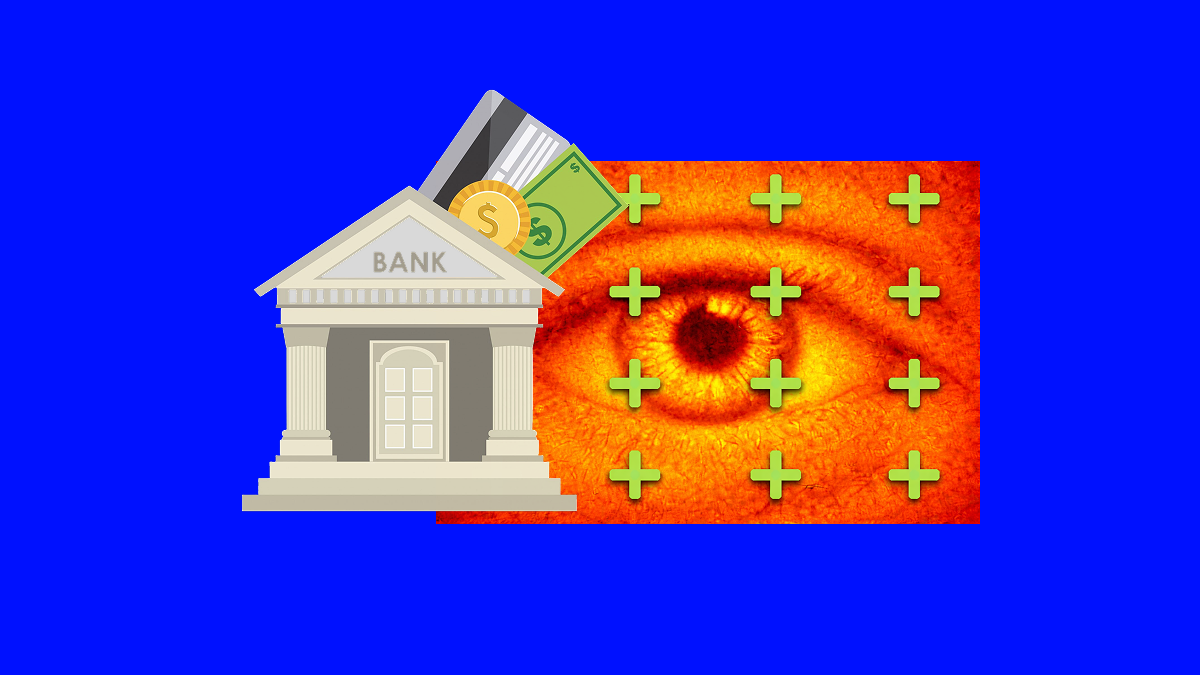
Age verification is not en never was about protecting children. It's about mass surveillance.

"Once a user verifies their identity with Persona, the software performs 269 distinct verification checks and scours the internet and government sources for potential matches, such as by matching your face to politically exposed persons (PEPs), and generating risk and similarity scores for each individual. IP addresses, browser fingerprints, device fingerprints, government ID numbers, phone numbers, names, faces, and even selfie backgrounds are analyzed and retained for up to three years."

therage.co/persona-age-verific

0
2
0
1
0
0
2
0
0
0
0
2
0

@Lydieℒӱḏɩę :blahaj: Ah yes. As someone who wears glasses, I need people to scrutinise my face even more. And not the fact that everyone is pointing their mobile phone cameras at everything and also posting that onto every possible social media, where that information is analysed. Don't also forget every possible smart device around and every security camera out there in the wild.

But fuck people with glasses. Those are the fucking worst.

EDIT: Note that this reaction is to the original post's unedited version, which did not specify to be wary of obvious camera enabled smart glasses, but any people with glasses.

0

Oh My God :)) Now You can interact with my posts from your fediverse instance, by setting your instance in your browser localstorage, once this is set, click the Fediverse icon and you’ll see my post through your own mastodon/pleroma instance !

🔗 https://rmendes.net/notes/2026/02/22/d0c0e

0
0
0
0
0
0