The argument that capitalists are needed to provide workers with means of production, and profit is their reward for doing so, is nonsense.
All capitalists have are paper or digital claims on the right to allocate means of production or material resources. All of the actual material resources -- means of production and raw materials -- are entirely the product of labor acting on free gifts of nature.
The entire point at issue is the legitimacy of the process by which capitalists happen to be in possession of those paper or digital claims, and how workers come to be dependent on those claims. Why, instead of groups of workers simply acting on the free gifts of nature, advancing streams of material resources to one another, and using a simple unit of account to track the balance of these advances of material resources and who owes what to whom, do they have to go to someone who is in possession of stockpiles of these imaginary paper claims?
Why are capitalists able to interpose themselves between groups of workers, and create the illusion that they are "providing" something when they are in fact simply controlling a toll gate?
The problem is the myth that money is a "thing," some sort of commodity with an independent existence and value of its own, when in fact it is simply a unit of measurement like an inch or a pound. We have a money and credit system based on the myth that a certain class of people must accumulate a pile of paper claims and then "lend" credit "against" them -- a "service" for which they are entitled to payment.
It's as nonsensical as the idea that, in order to cut lumber and build something, a carpenter must first find someone in possession of a pile of inches who can provide them. Imagine all the wasted resources, all the impeded production, if such a bizarre state of affairs actually existed. Imagine how much housing would go unbuilt, how much food would go uneaten, if before the carpenter could saw lumber or the butcher could weigh a cut of meat they had to go to the owner of a supply of inches or pounds and pay tribute for using them. There would be an entire class of people whose incomes came from such tribute for not impeding production. Great amounts of use-value would go unproduced despite the producers having the labor and materials required for production, for want of enough money to pay for the inches and pounds. The owners of inches and pounds would use their revenue to pay for still more inches and pounds, continuing to concentrate the ownership of them, so that they could charge higher and higher prices. There would be great accumulations of inches and pounds, far more than could be used, and equally great amounts of labor and material resources going idle, because producers could not afford the inches and pounds needed to put their labor and materials to use.
This is the world we live in.




 で恐縮だが、
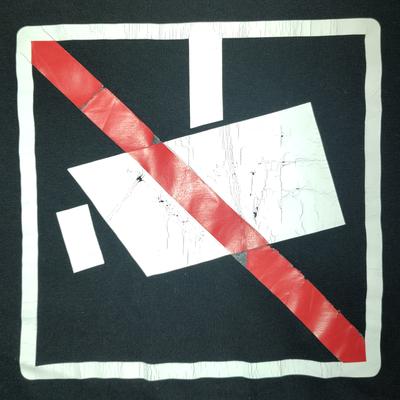
 写真部展の一枚絵のデザイン良すぎるよね

 시오
시오



 Jaeho Lee












 洪 民憙(ホン・ミンヒ)
 @
@
 Kagami is they/them 🏳️⚧️



 헤카
헤카

 wakest ⁂
 梅田セゾン
梅田セゾン 
 GENKI
GENKI
 @
@ @
@ @
@ @
@ @
@ @
@


 / #2025春大阪オフ
 蝉コロン(oφo;)📷️






 나나나나미
나나나나미









 洪 民憙 (Hong Minhee)