What is Hackers' Pub?

Hackers' Pub is a place for software engineers to share their knowledge and experience with each other. It's also an ActivityPub-enabled social network, so you can follow your favorite hackers in the fediverse and get their latest posts in your feed.

0
0
1

This might be a dumb question, but if anyone here has used by : is there any way to host more than one bot without using different subdomains?

I'd like to self-host more than just my Ralsei bot and, as far as I know, an easy way to do it would be to use different subdomains for each one. However, right now I only have access to neofox.dedyn.io and no way to register/use other subdomains through my DDNS (and I'd like to keep using that for the time being)

From what I understood through the docs there might be a chance to achieve what I'm thinking about by using a custom Bot.fetch() method instead of passing the built-in one to Deno/Bun, but I'm not too sure, and that's why I'm asking here first :neobot_think:

0
0
0
0
0
4
0
0
0
0

"외신들은 젊은 남성들이 기성세대보다 더한 전통적·성차별적 고정관념을 형성하게 된 배경으로, 경제적 불안 및 온라인·소셜미디어 문화의 영향을 제기했다. ‘성평등 정책이 남성의 기회·자원을 빼앗는다’는 불안을 자극하며 남성 우월주의와 여성혐오 담론을 퍼뜨리는 ‘매노스피어’(남성 중심 온라인 커뮤니티)와 온라인 인플루언서들이 젊은 세대 남성의 인식에 상당한 영향을 미친다는 뜻이다." 전세계 16~30살 남자의 31%가 저 모양이라는 사실을 우리는 이제 인정하고 가야 한다.

RE: https://bsky.app/profile/did:plc:a6qvfkbrohedqy3dt6k5mdv6/post/3mgmw72j2qc2q

0
0
1
1
0
0
0
0

EDIT 3: This is really bad, we've found AI slop from before the AI commits we knew of. Please see codeberg.org/NerdNextDoor/evi/. We're currently discussing the best way to proceed over IRC.

EDIT 2: I forgot to update this, the project is called EVi now.

EDIT: I updated the fork to last commit before the AI slop. It's now relatively new.

hard-forked vim at release 9.1.0 (Jan 2024)

codeberg.org/NerdNextDoor/vim

maybe we can get a group of people behind this??

Fuck AI.

0
16
0
0
0
0
0
0
0

검찰이 정치적 중립을 안 지키고 행정부-법무부 소속인 검사가 사법부 전체와 대등한 필요이상의 권위를 갖게 되는걸 박살내기로 한건데 대법원하고 대공소청을 기존과 같은 방식으로 연결해? 국민을 전부 바보 멍청이로 아나.

RE: https://bsky.app/profile/did:plc:a6qvfkbrohedqy3dt6k5mdv6/post/3mgmyvdpx4c2q

0
0
0

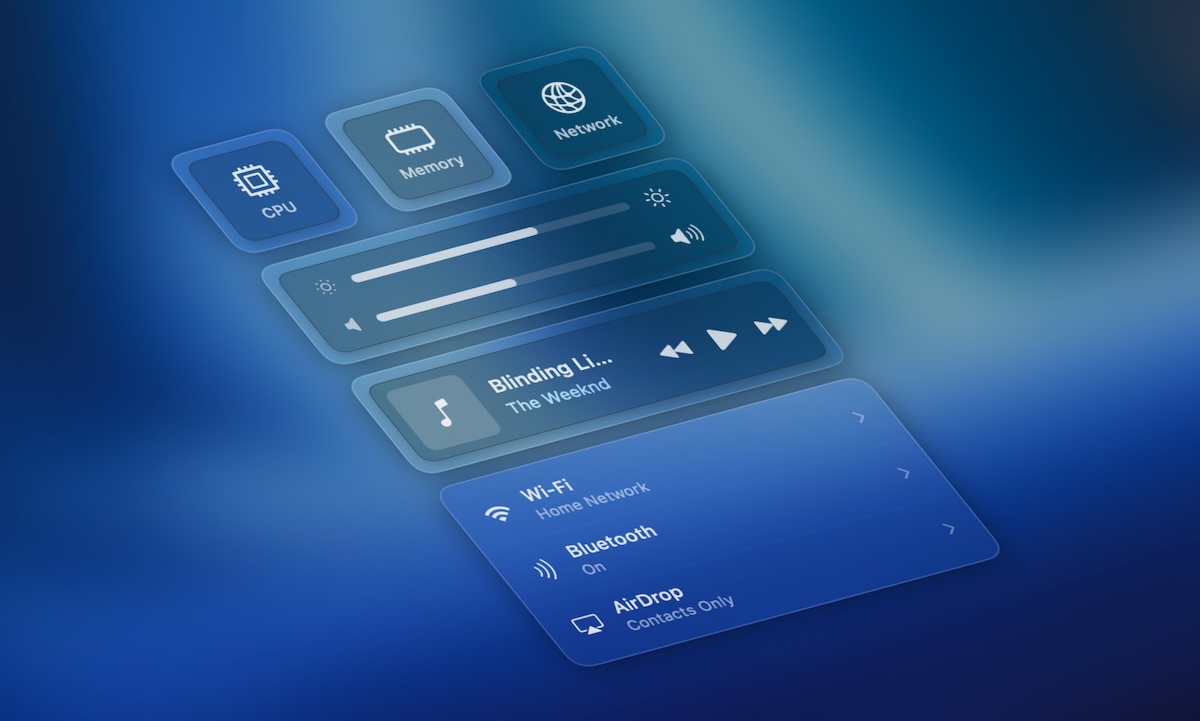
Ever wondered how macOS blur effects really work under the hood? This fascinating reverse engineering journey challenges assumptions about 𝑁𝑆𝑉𝑖𝑠𝑢𝑎𝑙𝐸𝑓𝑓𝑒𝑐𝑡𝑉𝑖𝑒𝑤, explores alternatives, and shares great discoveries along the way.

🔗: oskargroth.com/blog/reverse-en by Oskar Groth (@oskargrothOskar)

0
0
0
0
0
0
0
0
0
0
0
0
24
0

RE: mastodon.social/@bagder/116200

💯 I gave them quite a bit of feedback while I was on the Python Software Foundation board. While a few typo-level fixes were implemented, all/most concerns were completely ignored.

This is why I struggle to take these orgs seriously.

cc @bagderdaniel:// stenberg://

0
0
0
0

Salvatore Sanfilippo (antirez) and Armin Ronacher (mitsuhiko) both argue that AI reimplementation of copyleft libraries is fine. Their legal reasoning might be correct. That's not the point. Legal and legitimate are different things—and both pieces quietly assume otherwise.

Is legal the same as legitimat...

0
0
0

I stumbled on an interesting white paper, "Unlocking Python's Cores: Hardware Usage and Energy Implications of Removing the GIL."

Python's energy impact isn't as high on my bingo card, but I thought it was worth sharing because it's relevant to many of you.

arxiv.org/abs/2603.04782

arXiv logo

Unlocking Python's Cores: Hardware Usage and Energy Implications of Removing the GIL

Python's Global Interpreter Lock prevents execution on more than one CPU core at the same time, even when multiple threads are used. However, starting with Python 3.13 an experimental build allows disabling the GIL. While prior work has examined speedup implications of this disabling, the effects on energy consumption and hardware utilization have received less attention. This study measures execution time, CPU utilization, memory usage, and energy consumption using four workload categories: NumPy-based, sequential kernels, threaded numerical workloads, and threaded object workloads, comparing GIL and free-threaded builds of Python 3.14.2. The results highlight a trade-off. For parallelizable workloads operating on independent data, the free-threaded build reduces execution time by up to 4 times, with a proportional reduction in energy consumption, and effective multi-core utilization, at the cost of an increase in memory usage. In contrast, sequential workloads do not benefit from removing the GIL and instead show a 13-43% increase in energy consumption. Similarly, workloads where threads frequently access and modify the same objects show reduced improvements or even degradation due to lock contention. Across all workloads, energy consumption is proportional to execution time, indicating that disabling the GIL does not significantly affect power consumption, even when CPU utilization increases. When it comes to memory, the no-GIL build shows a general increase, more visible in virtual memory than in physical memory. This increase is primarily attributed to per-object locking, additional thread-safety mechanisms in the runtime, and the adoption of a new memory allocator. These findings suggest that Python's no-GIL build is not a universal improvement. Developers should evaluate whether their workload can effectively benefit from parallel execution before adoption.

arxiv.org · arXiv.org

0
0