What is Hackers' Pub?

Hackers' Pub is a place for software engineers to share their knowledge and experience with each other. It's also an ActivityPub-enabled social network, so you can follow your favorite hackers in the fediverse and get their latest posts in your feed.

I'm writing this in English.

Not because English is my first language—it isn't. I'm writing this in English because if I wrote it in Korean, the people I'm addressing would run it through an outdated translator, misread it, and respond to something I never said. The responsibility for that mistranslation would fall on me. It always does.

This is the thing Eugen Rochko's post misses, despite its good intentions.

@GargronEugen Rochko argues that LLMs are no substitute for human translators, and that people who think otherwise don't actually rely on translation. He's right about some of this. A machine-translated novel is not the same as one rendered by a skilled human translator. But the argument rests on a premise that only makes sense from a certain position: that translation is primarily about quality, about the aesthetic experience of reading literature in another language.

For many of us, translation is first about access.

The professional translation market doesn't scale to cover everything. It never has. What gets translated—and into which languages—follows the logic of cultural hegemony. Works from dominant Western languages flow outward, translated into everything. Works from East Asian languages trickle in, selectively, slowly, on someone else's schedule. The asymmetry isn't incidental; it's structural.

@GargronEugen Rochko notes, fairly, that machine translation existed decades before LLMs. But this is only half the story, and which half matters depends entirely on which languages you're talking about. European language pairs were reasonably serviceable with older tools. Korean–English, Japanese–English, Chinese–English? Genuinely usable translation for these pairs arrived with the LLM era. Treating “machine translation” as a monolithic technology with a uniform history erases the experience of everyone whose language sits far from the Indo-European center.

There's also something uncomfortable in the framing of the button-press thought experiment: “I would erase LLMs even if it took machine translation with it.” For someone whose language has always been peripheral, that button looks very different. It's not an abstract philosophical position; it's a statement about whose access to information is expendable.

I want to be clear: none of this is an argument that LLMs are good, or that the harms @GargronEugen Rochko describes aren't real. They are. But a critique of AI doesn't become more universal by ignoring whose languages have always been on the margins. If anything, a serious critique of AI's political economy should be more attentive to those asymmetries, not less.

The fact that I'm writing this in English, carefully, so it won't be misread—that's not incidental to my argument. That is my argument.


5
13
0
0
0

I'm writing this in English.

Not because English is my first language—it isn't. I'm writing this in English because if I wrote it in Korean, the people I'm addressing would run it through an outdated translator, misread it, and respond to something I never said. The responsibility for that mistranslation would fall on me. It always does.

This is the thing Eugen Rochko's post misses, despite its good intentions.

@GargronEugen Rochko argues that LLMs are no substitute for human translators, and that people who think otherwise don't actually rely on translation. He's right about some of this. A machine-translated novel is not the same as one rendered by a skilled human translator. But the argument rests on a premise that only makes sense from a certain position: that translation is primarily about quality, about the aesthetic experience of reading literature in another language.

For many of us, translation is first about access.

The professional translation market doesn't scale to cover everything. It never has. What gets translated—and into which languages—follows the logic of cultural hegemony. Works from dominant Western languages flow outward, translated into everything. Works from East Asian languages trickle in, selectively, slowly, on someone else's schedule. The asymmetry isn't incidental; it's structural.

@GargronEugen Rochko notes, fairly, that machine translation existed decades before LLMs. But this is only half the story, and which half matters depends entirely on which languages you're talking about. European language pairs were reasonably serviceable with older tools. Korean–English, Japanese–English, Chinese–English? Genuinely usable translation for these pairs arrived with the LLM era. Treating “machine translation” as a monolithic technology with a uniform history erases the experience of everyone whose language sits far from the Indo-European center.

There's also something uncomfortable in the framing of the button-press thought experiment: “I would erase LLMs even if it took machine translation with it.” For someone whose language has always been peripheral, that button looks very different. It's not an abstract philosophical position; it's a statement about whose access to information is expendable.

I want to be clear: none of this is an argument that LLMs are good, or that the harms @GargronEugen Rochko describes aren't real. They are. But a critique of AI doesn't become more universal by ignoring whose languages have always been on the margins. If anything, a serious critique of AI's political economy should be more attentive to those asymmetries, not less.

The fact that I'm writing this in English, carefully, so it won't be misread—that's not incidental to my argument. That is my argument.

5
13
0

I'm writing this in English.

Not because English is my first language—it isn't. I'm writing this in English because if I wrote it in Korean, the people I'm addressing would run it through an outdated translator, misread it, and respond to something I never said. The responsibility for that mistranslation would fall on me. It always does.

This is the thing Eugen Rochko's post misses, despite its good intentions.

@GargronEugen Rochko argues that LLMs are no substitute for human translators, and that people who think otherwise don't actually rely on translation. He's right about some of this. A machine-translated novel is not the same as one rendered by a skilled human translator. But the argument rests on a premise that only makes sense from a certain position: that translation is primarily about quality, about the aesthetic experience of reading literature in another language.

For many of us, translation is first about access.

The professional translation market doesn't scale to cover everything. It never has. What gets translated—and into which languages—follows the logic of cultural hegemony. Works from dominant Western languages flow outward, translated into everything. Works from East Asian languages trickle in, selectively, slowly, on someone else's schedule. The asymmetry isn't incidental; it's structural.

@GargronEugen Rochko notes, fairly, that machine translation existed decades before LLMs. But this is only half the story, and which half matters depends entirely on which languages you're talking about. European language pairs were reasonably serviceable with older tools. Korean–English, Japanese–English, Chinese–English? Genuinely usable translation for these pairs arrived with the LLM era. Treating “machine translation” as a monolithic technology with a uniform history erases the experience of everyone whose language sits far from the Indo-European center.

There's also something uncomfortable in the framing of the button-press thought experiment: “I would erase LLMs even if it took machine translation with it.” For someone whose language has always been peripheral, that button looks very different. It's not an abstract philosophical position; it's a statement about whose access to information is expendable.

I want to be clear: none of this is an argument that LLMs are good, or that the harms @GargronEugen Rochko describes aren't real. They are. But a critique of AI doesn't become more universal by ignoring whose languages have always been on the margins. If anything, a serious critique of AI's political economy should be more attentive to those asymmetries, not less.

The fact that I'm writing this in English, carefully, so it won't be misread—that's not incidental to my argument. That is my argument.

5
13
0
0
0
0
0
0

🫧 socialcoding.. shared the below article:

ap, the ActivityPub API command-line client

Evan Prodromou @evanprodromou@socialwebfoundation.org

As part of my book "ActivityPub: Programming for the Social Web", I created a coding example to show how to program for the ActivityPub API. ap is a command-line client, written in Python, for doing basic tasks with ActivityPub.For example, you can log into a server using this command: ap login yourname@yourserver.example Once you're logged in, you can follow someone: ap follow other@different.example Or, you could post some content: ap create note --public "Hello, World" This isn't […]

Read more →
0
0
0
1

I was doing shorts long before tiktok and youtube you know. Short music though, so nothing that should rot your brain from the outside in.

Need something snappy for your next project?
Perhaps you want an indefinite loop so you don't have to think about it and can just fade when ready? No problem.
You could turn some into ring tones too if you felt like it.
Anyway, here's a collection of 180 Shorts, 1210 total items that won't cost you anything.

One click to play, one click to download, no hoops to jump through at all.
My site doesn't require cookie consent, your last five years of social media accounts, the email address you used in school you'd rather forget about, nope.
Listen, download, share and enjoy. That's it.

hear-me.social/@Onj/1156902183

0
5
0

NEW: A group of hacktivists calling themselves "Department of Peace" claims to have hacked an office wihin the Department of Homeland Security.

The hacktivists leaked data on more than 6,000 contracts between DHS and ICE and private companies to the transparency website Distributed Denial of Secrets.

"The DHS is killing us and people deserve to know which companies support them and what they’re working on,” the hackers wrote in a manifesto.

techcrunch.com/2026/03/02/hack

0
1
0
0
0
0
0
0
1
0
1

I'm writing this in English.

Not because English is my first language—it isn't. I'm writing this in English because if I wrote it in Korean, the people I'm addressing would run it through an outdated translator, misread it, and respond to something I never said. The responsibility for that mistranslation would fall on me. It always does.

This is the thing Eugen Rochko's post misses, despite its good intentions.

@GargronEugen Rochko argues that LLMs are no substitute for human translators, and that people who think otherwise don't actually rely on translation. He's right about some of this. A machine-translated novel is not the same as one rendered by a skilled human translator. But the argument rests on a premise that only makes sense from a certain position: that translation is primarily about quality, about the aesthetic experience of reading literature in another language.

For many of us, translation is first about access.

The professional translation market doesn't scale to cover everything. It never has. What gets translated—and into which languages—follows the logic of cultural hegemony. Works from dominant Western languages flow outward, translated into everything. Works from East Asian languages trickle in, selectively, slowly, on someone else's schedule. The asymmetry isn't incidental; it's structural.

@GargronEugen Rochko notes, fairly, that machine translation existed decades before LLMs. But this is only half the story, and which half matters depends entirely on which languages you're talking about. European language pairs were reasonably serviceable with older tools. Korean–English, Japanese–English, Chinese–English? Genuinely usable translation for these pairs arrived with the LLM era. Treating “machine translation” as a monolithic technology with a uniform history erases the experience of everyone whose language sits far from the Indo-European center.

There's also something uncomfortable in the framing of the button-press thought experiment: “I would erase LLMs even if it took machine translation with it.” For someone whose language has always been peripheral, that button looks very different. It's not an abstract philosophical position; it's a statement about whose access to information is expendable.

I want to be clear: none of this is an argument that LLMs are good, or that the harms @GargronEugen Rochko describes aren't real. They are. But a critique of AI doesn't become more universal by ignoring whose languages have always been on the margins. If anything, a serious critique of AI's political economy should be more attentive to those asymmetries, not less.

The fact that I'm writing this in English, carefully, so it won't be misread—that's not incidental to my argument. That is my argument.

5
13
0
0
0
0
0
0

전기기사 사토리아는 이제 다시 오스트라바로 돌아갈 것이다. 국가대표 유니폼의 무게를 내려놓고, 본업과 야구를 오가는 일상으로. 하지만 2023년 도쿄돔에서 오타니를 삼진으로 잡아낸 장면, 그리고 2026년 도쿄돔에서 마운드를 지킨 시간은 오래도록 남을 것이다. 야구를 사랑하지 않을 수 없는 이유를 보여준 경기였다.

전기기사 사토리아는 이제 다시 오스트라바로 돌아갈 것이...

0
0
0
0

Thinking of getting a new raspberry pi. Should I get a model 4 or 5? The 4 would still work with my existing USB power adapter and it has an audio jack that I might wanna use. Any downsides I’m overlooking? I’d like to host some web-services. Maybe even mastodon. But sure there’ll be more tasks I’ll throw on it as time goes by. Home assistant, kodi, jukebox …

0
0

전기기사 사토리아는 이제 다시 오스트라바로 돌아갈 것이다. 국가대표 유니폼의 무게를 내려놓고, 본업과 야구를 오가는 일상으로. 하지만 2023년 도쿄돔에서 오타니를 삼진으로 잡아낸 장면, 그리고 2026년 도쿄돔에서 마운드를 지킨 시간은 오래도록 남을 것이다. 야구를 사랑하지 않을 수 없는 이유를 보여준 경기였다.

전기기사 사토리아는 이제 다시 오스트라바로 돌아갈 것이...

0
1
0
0
0
0

I'm writing this in English.

Not because English is my first language—it isn't. I'm writing this in English because if I wrote it in Korean, the people I'm addressing would run it through an outdated translator, misread it, and respond to something I never said. The responsibility for that mistranslation would fall on me. It always does.

This is the thing Eugen Rochko's post misses, despite its good intentions.

@GargronEugen Rochko argues that LLMs are no substitute for human translators, and that people who think otherwise don't actually rely on translation. He's right about some of this. A machine-translated novel is not the same as one rendered by a skilled human translator. But the argument rests on a premise that only makes sense from a certain position: that translation is primarily about quality, about the aesthetic experience of reading literature in another language.

For many of us, translation is first about access.

The professional translation market doesn't scale to cover everything. It never has. What gets translated—and into which languages—follows the logic of cultural hegemony. Works from dominant Western languages flow outward, translated into everything. Works from East Asian languages trickle in, selectively, slowly, on someone else's schedule. The asymmetry isn't incidental; it's structural.

@GargronEugen Rochko notes, fairly, that machine translation existed decades before LLMs. But this is only half the story, and which half matters depends entirely on which languages you're talking about. European language pairs were reasonably serviceable with older tools. Korean–English, Japanese–English, Chinese–English? Genuinely usable translation for these pairs arrived with the LLM era. Treating “machine translation” as a monolithic technology with a uniform history erases the experience of everyone whose language sits far from the Indo-European center.

There's also something uncomfortable in the framing of the button-press thought experiment: “I would erase LLMs even if it took machine translation with it.” For someone whose language has always been peripheral, that button looks very different. It's not an abstract philosophical position; it's a statement about whose access to information is expendable.

I want to be clear: none of this is an argument that LLMs are good, or that the harms @GargronEugen Rochko describes aren't real. They are. But a critique of AI doesn't become more universal by ignoring whose languages have always been on the margins. If anything, a serious critique of AI's political economy should be more attentive to those asymmetries, not less.

The fact that I'm writing this in English, carefully, so it won't be misread—that's not incidental to my argument. That is my argument.

5
13
0

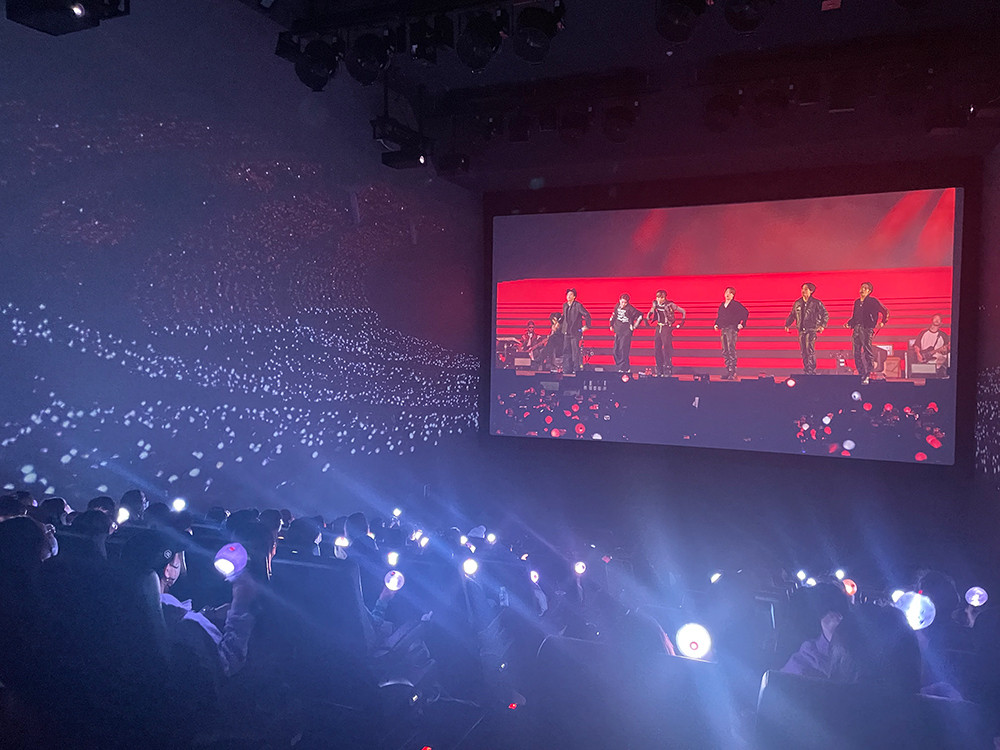
21일 서울 광화문광장에서 열리는 그룹 방탄소년단(BTS)의 컴백 공연을 앞두고 서울 도심이 사실상 초대형 야외 공연장으로 변할 전망이다. 최대 26만 명이 몰릴 것으로 예상되면서 정부와 서울시, 경찰, 민간 기업까지 총력 대응에 나섰다. 교통 통제부터 문화시설 휴관, 기업 건물 폐쇄까지 도심 전반에 걸쳐 변화가 예고됐다. 등록 2026-03-10 07:16

21일 서울 광화문광장에서 열리는 그룹 방탄소년단(BT...

0
0
2
0
0

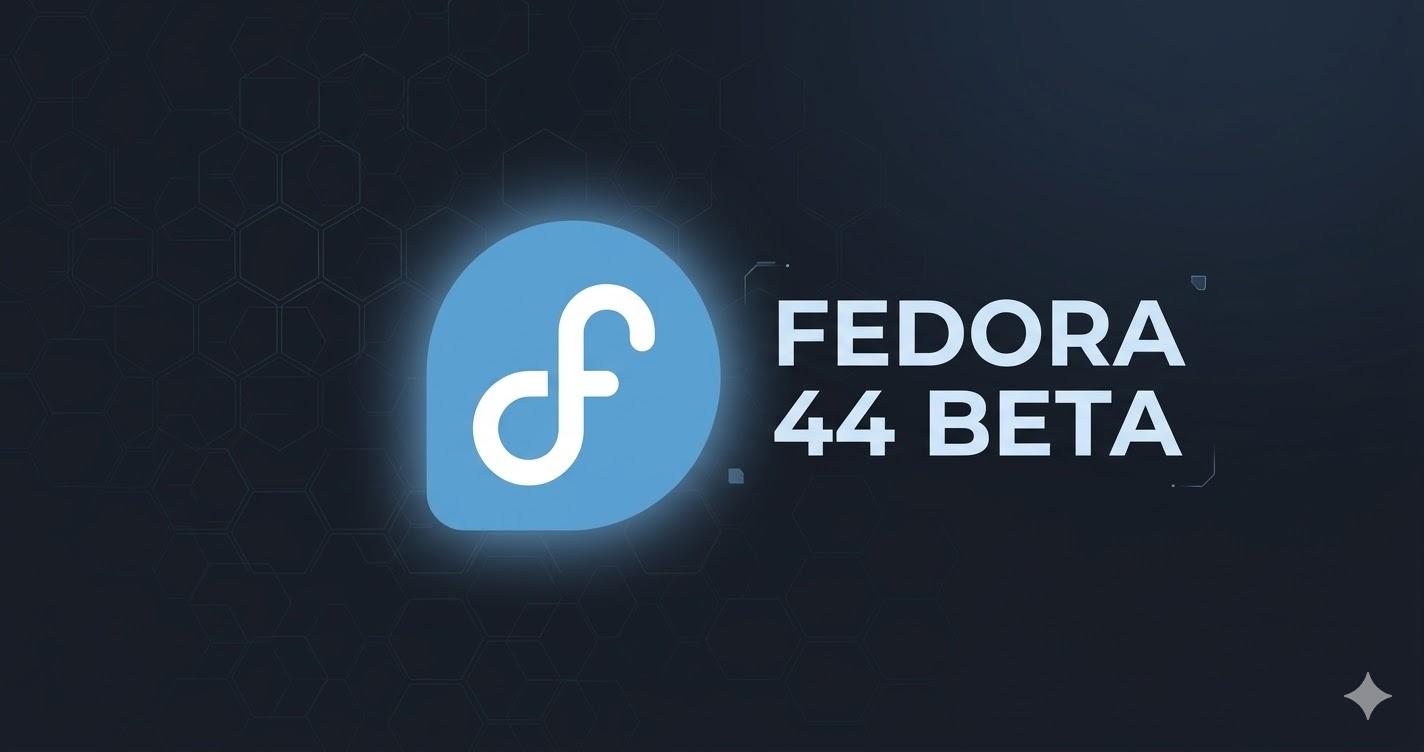
Fedora Linux 44 Beta is now available for testing.

Notable changes:
- Plasma Login Manager replaces SDDM on KDE
- Post-install Plasma Setup app for a unified first-run experience
- Nix package manager added as a developer tool
- 99% reproducible package builds targeted
- Budgie 10.10 drops X11 for Wayland
- USB live media now supports persistent overlays
- Golang 1.26, MariaDB 11.8, Ansible 13 included

Full details: opensourcefeed.org/fedora-linu

Fedora Linux 44 Beta is now available for testing.

Notable changes:
- Plasma Login Manager replaces SDDM on KDE
- Post-install Plasma Setup app for a unified first-run experience
- Nix package manager added as a developer tool
- 99% reproducible package builds targeted
- Budgie 10.10 drops X11 for Wayland
- USB live media now supports persistent overlays
- Golang 1.26, MariaDB 11.8, Ansible 13 included

Full details: https://www.opensourcefeed.org/fedora-linux-44-beta-released/

#Fedora #Linux #OpenSource #FOSS
0

洪 民憙 (Hong Minhee) :nonbinary: shared the below article:

ap, the ActivityPub API command-line client

Evan Prodromou @evanprodromou@socialwebfoundation.org

As part of my book "ActivityPub: Programming for the Social Web", I created a coding example to show how to program for the ActivityPub API. ap is a command-line client, written in Python, for doing basic tasks with ActivityPub.For example, you can log into a server using this command: ap login yourname@yourserver.example Once you're logged in, you can follow someone: ap follow other@different.example Or, you could post some content: ap create note --public "Hello, World" This isn't […]

Read more →
0
0
0
3
0