What is Hackers' Pub?

Hackers' Pub is a place for software engineers to share their knowledge and experience with each other. It's also an ActivityPub-enabled social network, so you can follow your favorite hackers in the fediverse and get their latest posts in your feed.

1
1
0
0
13
0
0
0
1
0
0
0

서울대공원에서 태어나 13년을 살았던 시베리아호랑이 ‘미호’가 지난달 18일 방사장 문단속 미비로 다른 개체의 공격을 받고 목숨을 잃었습니다. 호랑이 ‘가람’ 또한 방사장 청소 중 문 개방 실수로 다른 호랑이에게 물려 죽었습니다. 건강 문제로 2019년부터 현재까지 서울대공원에서 사망한 시베리아호랑이는 15마리에 이릅니다.

7년간 15마리 떠났다…서울대공원 아기 호랑이 ‘설호’...

0

“그러나 새로운 이론은 낡은 체계 안에서 알을 깨고서 등장하는 경우가 많았다. 창의성에는 여러 종류가 있다. 이미 알려진 것들을 새롭게 조합하거나 가지 않은 길을 개척하는 창의성이 있는가 하면, 기존 규칙 자체를 바꾸어 문제를 푸는 창의성도 있다. 게임의 규칙을 잘 이해하는 사람이 그 규칙도 바꿀 수 있다.”

갈릴레오는 왜 천동설 책을 탐독했나 [오철우의 과학풍경...

0
0
0

I'm writing this in English.

Not because English is my first language—it isn't. I'm writing this in English because if I wrote it in Korean, the people I'm addressing would run it through an outdated translator, misread it, and respond to something I never said. The responsibility for that mistranslation would fall on me. It always does.

This is the thing Eugen Rochko's post misses, despite its good intentions.

@GargronEugen Rochko argues that LLMs are no substitute for human translators, and that people who think otherwise don't actually rely on translation. He's right about some of this. A machine-translated novel is not the same as one rendered by a skilled human translator. But the argument rests on a premise that only makes sense from a certain position: that translation is primarily about quality, about the aesthetic experience of reading literature in another language.

For many of us, translation is first about access.

The professional translation market doesn't scale to cover everything. It never has. What gets translated—and into which languages—follows the logic of cultural hegemony. Works from dominant Western languages flow outward, translated into everything. Works from East Asian languages trickle in, selectively, slowly, on someone else's schedule. The asymmetry isn't incidental; it's structural.

@GargronEugen Rochko notes, fairly, that machine translation existed decades before LLMs. But this is only half the story, and which half matters depends entirely on which languages you're talking about. European language pairs were reasonably serviceable with older tools. Korean–English, Japanese–English, Chinese–English? Genuinely usable translation for these pairs arrived with the LLM era. Treating “machine translation” as a monolithic technology with a uniform history erases the experience of everyone whose language sits far from the Indo-European center.

There's also something uncomfortable in the framing of the button-press thought experiment: “I would erase LLMs even if it took machine translation with it.” For someone whose language has always been peripheral, that button looks very different. It's not an abstract philosophical position; it's a statement about whose access to information is expendable.

I want to be clear: none of this is an argument that LLMs are good, or that the harms @GargronEugen Rochko describes aren't real. They are. But a critique of AI doesn't become more universal by ignoring whose languages have always been on the margins. If anything, a serious critique of AI's political economy should be more attentive to those asymmetries, not less.

The fact that I'm writing this in English, carefully, so it won't be misread—that's not incidental to my argument. That is my argument.

@hongminhee@hollo.social I think your post makes me think more critically about the use of LLMs for translation services. It is easy for me to judge from a position of privilege because I am a native English speaker, and I do not realize the access I am given simply because of it.

While reading your post it also made me think about the sacrifices you made to contribute to this community. There are precious few people in the Asia-Pacific region who regularly contribute to AP development, and a large part of that is the language barrier.

If LLM-translation makes the AP development community less euro-america-centric, then I am all for it. Cultural differences we can work through, but language barriers are harder to bypass!

Aside, congratulations for making it onto Hacker News front page :slightly_smiling_face:

0
1
0
0

AltStore 2.3 (81)

NEW

Social Web
• Discover apps and sources on our explore page explore.alt.store
• Developers can opt-in to have their sources federated to explore page
• View all likes on federated apps, app updates, and news alerts in-app
• Sign in with your Mastodon or Bluesky account to like federated items directly in-app
• Share links to federated items with others or view them in system browser

Liquid Glass UI
• Updated design to fit at home on iOS 26
• New Liquid Glass app icon

Source Collections
• Redesigned Add Source screen makes discovering sources easier than ever
• View all featured sources, or view specific source “collections”

FIXED

• Fixed unreadable text in light mode for some news alerts (thanks @partyknightsdev!)
• Fixed My Apps tab badge count showing incorrect number of app updates
• Fixed showing empty text view for updates with no description
• Fixed Apple’s system download button not being accessible with VoiceOver
• Fixed difficulty accessing app banner button when VoiceOver is enabled
• Fixed category cells not being accessible with VoiceOver
• Fixed AltStore incorrectly thinking an updated failed when it succeeded in background
• Fixed false-positive errors due to installed version (temporarily) not matching expected version

altstore.io/source/marketplace

0
2

自力で書いた文章では労力がかかる割にぎこちなく偏見や誤解を招き、LLMを通せばslop臭さから避けられ、自分の母語で書けば当然読まれないまたは読み手が使う機械翻訳ツールの誤訳によるミスコミュニケーションに煩わされることになるというの、どうすれば良いのだろうね。やっぱり印欧語話者に生まれなかったのが悪いのですかね。

正直この文章も、洪さんの今までの活動に対する信用があるからこそ読む気になれるけど、仮にその前提がなければ私も4段落目くらいでLLMっぽさを感じて警戒してしまうところだと思うし、私自身も非母語話者に不利な構造にある種加担しているところはある

0

Linkedin linkedinning as hard as they can.

Stopwatch, back of the envelope, if I hold down that up arrow I should get to the verification code they sent me in just under seven hours.

0
0

From back when I used to flip through a thick dictionary, taking a minute for each sentence, to now, when I use an LLM to write in English, people don't realize that I'm personally speaking to them in English for their sake. Honestly, I just want to speak in Korean. I hate English.

0

I'm writing this in English.

Not because English is my first language—it isn't. I'm writing this in English because if I wrote it in Korean, the people I'm addressing would run it through an outdated translator, misread it, and respond to something I never said. The responsibility for that mistranslation would fall on me. It always does.

This is the thing Eugen Rochko's post misses, despite its good intentions.

@GargronEugen Rochko argues that LLMs are no substitute for human translators, and that people who think otherwise don't actually rely on translation. He's right about some of this. A machine-translated novel is not the same as one rendered by a skilled human translator. But the argument rests on a premise that only makes sense from a certain position: that translation is primarily about quality, about the aesthetic experience of reading literature in another language.

For many of us, translation is first about access.

The professional translation market doesn't scale to cover everything. It never has. What gets translated—and into which languages—follows the logic of cultural hegemony. Works from dominant Western languages flow outward, translated into everything. Works from East Asian languages trickle in, selectively, slowly, on someone else's schedule. The asymmetry isn't incidental; it's structural.

@GargronEugen Rochko notes, fairly, that machine translation existed decades before LLMs. But this is only half the story, and which half matters depends entirely on which languages you're talking about. European language pairs were reasonably serviceable with older tools. Korean–English, Japanese–English, Chinese–English? Genuinely usable translation for these pairs arrived with the LLM era. Treating “machine translation” as a monolithic technology with a uniform history erases the experience of everyone whose language sits far from the Indo-European center.

There's also something uncomfortable in the framing of the button-press thought experiment: “I would erase LLMs even if it took machine translation with it.” For someone whose language has always been peripheral, that button looks very different. It's not an abstract philosophical position; it's a statement about whose access to information is expendable.

I want to be clear: none of this is an argument that LLMs are good, or that the harms @GargronEugen Rochko describes aren't real. They are. But a critique of AI doesn't become more universal by ignoring whose languages have always been on the margins. If anything, a serious critique of AI's political economy should be more attentive to those asymmetries, not less.

The fact that I'm writing this in English, carefully, so it won't be misread—that's not incidental to my argument. That is my argument.

0

I'm writing this in English.

Not because English is my first language—it isn't. I'm writing this in English because if I wrote it in Korean, the people I'm addressing would run it through an outdated translator, misread it, and respond to something I never said. The responsibility for that mistranslation would fall on me. It always does.

This is the thing Eugen Rochko's post misses, despite its good intentions.

@GargronEugen Rochko argues that LLMs are no substitute for human translators, and that people who think otherwise don't actually rely on translation. He's right about some of this. A machine-translated novel is not the same as one rendered by a skilled human translator. But the argument rests on a premise that only makes sense from a certain position: that translation is primarily about quality, about the aesthetic experience of reading literature in another language.

For many of us, translation is first about access.

The professional translation market doesn't scale to cover everything. It never has. What gets translated—and into which languages—follows the logic of cultural hegemony. Works from dominant Western languages flow outward, translated into everything. Works from East Asian languages trickle in, selectively, slowly, on someone else's schedule. The asymmetry isn't incidental; it's structural.

@GargronEugen Rochko notes, fairly, that machine translation existed decades before LLMs. But this is only half the story, and which half matters depends entirely on which languages you're talking about. European language pairs were reasonably serviceable with older tools. Korean–English, Japanese–English, Chinese–English? Genuinely usable translation for these pairs arrived with the LLM era. Treating “machine translation” as a monolithic technology with a uniform history erases the experience of everyone whose language sits far from the Indo-European center.

There's also something uncomfortable in the framing of the button-press thought experiment: “I would erase LLMs even if it took machine translation with it.” For someone whose language has always been peripheral, that button looks very different. It's not an abstract philosophical position; it's a statement about whose access to information is expendable.

I want to be clear: none of this is an argument that LLMs are good, or that the harms @GargronEugen Rochko describes aren't real. They are. But a critique of AI doesn't become more universal by ignoring whose languages have always been on the margins. If anything, a serious critique of AI's political economy should be more attentive to those asymmetries, not less.

The fact that I'm writing this in English, carefully, so it won't be misread—that's not incidental to my argument. That is my argument.

5
13
0

Dear Fedi friends,

I'd like to put together a list of people who are publicly resisting / calling out LLMs and AI slop.

Why? I enjoy reading my Fediverse feed in topical lists and I need something to counteract the unrelenting AI hype I see in the media.

Do you have any recommendations?

So far, at the top of my list I have:

@timnitGebruTimnit Gebru (she/her) @emilymbenderProf. Emily M. Bender(she/her) and @alexhanna of @DAIR

plus @cwebberChristine Lemmer-Webber @jaredwhiteJared “Indie Social Web” White and @tante

Anyone else to recommend who advocates for ?

0
50
0
0

I've been saying for a while that we need something like FediCon in East Asia. A dedicated conference is still a stretch, but I've been thinking about a smaller step:

@COSCUP 2026 (Taipei, Aug 8–9) is accepting proposals for community tracks. It might be worth trying to open a Social Web track there—something in the spirit of the Social Web devroom at FOSDEM.

Nothing is decided yet, but if you're working on , the , or anything in the social web space and might be interested in speaking (or co-organizing), I'd love to hear from you.

https://floss.social/@COSCUP/116152356550445285

3
5
0
0
0
0
0

I’m sorry to tell you that the doctor asked my wife to break her fast immediately and forbade her from continuing to fast because of her health condition and her pregnancy. After the examination, it turned out that she is suffering from very severe malnutrition, which could affect both her and the baby
I am very worried about her, and I hope that friends will stand by us and help us urgently so we can provide good food and the necessary care for her.
Iink chuffed.org/project/144437

I’m sorry to tell you that the doctor asked my wife to break her fast immediately and forbade her from continuing to fast because of her health condition and her pregnancy. After the examination, it turned out that she is suffering from very severe malnutrition, which could affect both her and the baby
I am very worried about her, and I hope that friends will stand by us and help us urgently so we can provide good food and the necessary care for her.
Iink https://chuffed.org/project/144437
#gaza #palestine
0
1
0
1
1
0
0

The notion of a broken clock being sometimes right is based on a gross misunderstanding of what information is.

A clock that always shows the same time is never right, even in the moments of the day when the time happens to be what it shows, because you don't gain any information about what time it is by looking at the clock.

This reasoning also applies to chatbots. If you can't tell whether what you have been given is useful information unless you alreay know the information, then you haven't been given useful information.

0
40
0
0
0

1/ 🪅 Great news!

Today, the voted to improve the Commission’s proposal for another extension of the ePrivacy derogation (often called "Chat Control1.0").

A large majority agreed that:
✅ Mass surveillance of private communications by Big Tech companies is not allowed, and any intrusion into people’s right to confidential communications needs to be based on reasonable suspicion;
✅ End-to-end encrypted communications cannot be weakened or undermined.

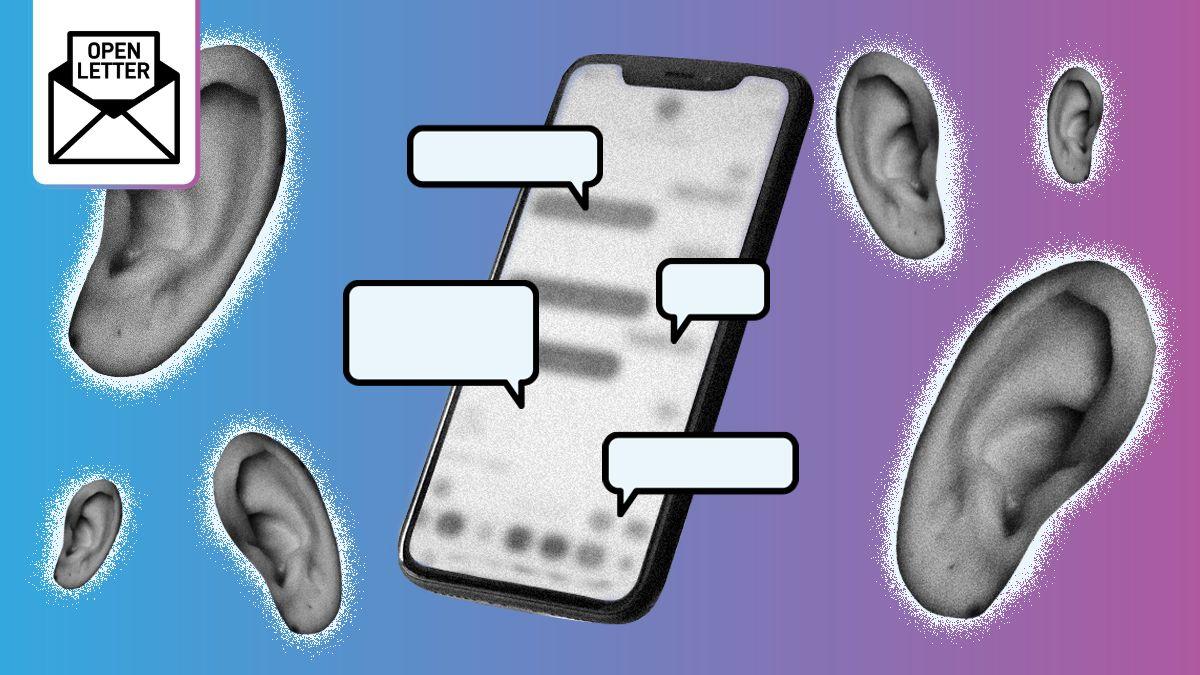
Smartphone with open speech bubbles and ears around it to symbolise control of private communications
0
1
0
0
0
1
0
0
0
5
0
0
0