Search results

We're happy to share that 44 Free and Open Source projects will receive financial & practical support for their contributions to the digital commons. We want to thank them for their efforts to create a shared digital infrastructure for us all.

This is the outcome of the 8th call of the NGI0 Commons Fund, bringing the total to 314 projects selected. The fund is made possible with financial support of @EC_NGINext Generation Internet

Learn about the projects at: nlnet.nl/news/2026/20260302-an

0
0
1

I've been increasingly concerned about the corporate monopoly over frontier LLMs. While many ethically-minded people choose to boycott these models, I believe passive resistance alone cannot break the structural grip of big tech. To truly “liberate” these technologies and turn them into public goods, we need to look beyond moral high grounds and engage with the material basis of AI—specifically compute, data, and the relations of production.

I've written two posts exploring this through the lens of historical materialism. The first piece analyzes why current “open source” definitions struggle with LLMs, and the second discusses what it means to “act materialistically” in our imperfect world. My goal is to suggest a path forward that moves from mere boycotting to a more proactive, structural socialization of AI infrastructure.

If you've been feeling uneasy about the AI landscape but aren't sure if boycotting is the final answer, I'd love for you to give these a read:

0
0
0

Open standards define how systems communicate, how data flows, and how secure and accessible our digital infrastructure is.

The Sovereign Tech Agency is looking at ways to better support maintainers and contributors working on these standards, building stronger, more interoperable digital ecosystems.

(1/2)

In our latest blog post, we explain our motivation for engaging in standards, reflect on conversations with maintainers, and outline the reasoning behind our current survey. The survey is still open and we encourage you to contribute your perspective.

➡️ Read our blog post: sovereign.tech/news/open-stand

➡️ Participate in the survey (runs until March, 9th): survey.sovereigntechfund.de/99

(2/2)

0

As an enthusiast for open source software who is also disabled, I get frustrated at how inaccessible a lot of open source software is. When there are accessibility options, they're usually bolted-on additions that don't work very well. Disabled users are forced into ad-hoc compromises that are laborious to install and labyrinthine to operate. The frustration often drives us back to corporate software. OSS is high friction and low benefit for many disabled users.

Open source developers would gain a lot from integrating accessible design into their products from the ground up (like TTS! My kingdom for fully integrated neural TTS on my browser and operating system). Accessibility features don't just help disabled people. More than half of all people using a phone use accessibility features. Do you really want to exclude half your users?

Accessibility also requires you to think about things like simplicity of design and ease of access for all your users. It can provide redundancy for errors (for example: alt text can be helpful when an image doesn't load, captions can provide a backup if their audio drops out, alternate input methods can allow people to continue using an app if they have keyboard or mouse issues). It can improve design (example: clearer instructions, easier to read text, simple consistent navigation). In short: it makes your software better.

Making the world more accessible for one group improves access for all: this is a basic principle of universal design. Stop excluding us and start making us the core of what you do — you will be a better developer for it.

I also want to note that tech companies are trying to use us as a meat shield. They're throwing AI into everything under the guise of "accessibility". Meta tried to roll out its smart glasses facial recognition feature to blind people first, to disguise the fact it was mass surveillance. There are so many examples.

Give us somewhere else to go. It's more important than ever right now. Accessible open source software is a tool of freedom and resistance.

0

As an enthusiast for open source software who is also disabled, I get frustrated at how inaccessible a lot of open source software is. When there are accessibility options, they're usually bolted-on additions that don't work very well. Disabled users are forced into ad-hoc compromises that are laborious to install and labyrinthine to operate. The frustration often drives us back to corporate software. OSS is high friction and low benefit for many disabled users.

Open source developers would gain a lot from integrating accessible design into their products from the ground up (like TTS! My kingdom for fully integrated neural TTS on my browser and operating system). Accessibility features don't just help disabled people. More than half of all people using a phone use accessibility features. Do you really want to exclude half your users?

Accessibility also requires you to think about things like simplicity of design and ease of access for all your users. It can provide redundancy for errors (for example: alt text can be helpful when an image doesn't load, captions can provide a backup if their audio drops out, alternate input methods can allow people to continue using an app if they have keyboard or mouse issues). It can improve design (example: clearer instructions, easier to read text, simple consistent navigation). In short: it makes your software better.

Making the world more accessible for one group improves access for all: this is a basic principle of universal design. Stop excluding us and start making us the core of what you do — you will be a better developer for it.

0
1
0
0
1
0

Hi everyone! 👋 Despite being a longtime Fediverse lurker (Mastodon.uno + a self-hosted blog), this is the first time I join a generalist English-speaking instance. After earning my PhD in (UBC) and working in journalism, I’m now exploring tech/policy roles, especially in , , and . Moving back to and keen to collaborate!

When I am off-duty, I’m a die-hard and a sucker for Turkish/Anatolian psychedelic rock 🙂

0

🚀 COSCUP 2026 Call for Participation is now open!

🎤 Community Tracks – Run a open-source agenda with talks, panels, or workshops. Apply by Mar 23. Spots are limited.

🛠 Community Booths – Showcase your project, recruit members, and connect. Apply by Jun 9. First come, first served.

👉 Apply here: s.coscup.org/26communityen

0

Im Landkreis Harz arbeiten Schüler:innen auf gebrauchten Business-Laptops mit -OS.

"Ich unterrichte keine Marke, sondern ich unterrichte Kompetenzen. Textverarbeitung, Textstrukturierung oder Tabellenkalkulation können mit genauso vermittelt werden wie mit Office." - Lehrerin Johanna Müller

Genau so geht und selbstbestimmte Techniknutzung! Keine überteuren Lizenzen, keine Schaffung von (Pfad)abhängigkeiten bereits im Kindesalter, keine Produktwerbung, für die auch noch gezahlt wird. Stattdessen nebenbei kritisches Denken fördern, während vordergründig Bürosoftware gelernt wird.

Quelle: mdr.de/nachrichten/sachsen-anh

0
0
0

Back in 2022, surrounded by colleagues who were infused with "open source scepticism", I wrote "Open Source in Enterprise Environments - Where Are We Now and What Is Our Way Forward?" nxdomain.no/~peter/opensource_ as an explainer.

Hopefully a useful thing for others too, with links therein

0
0
0

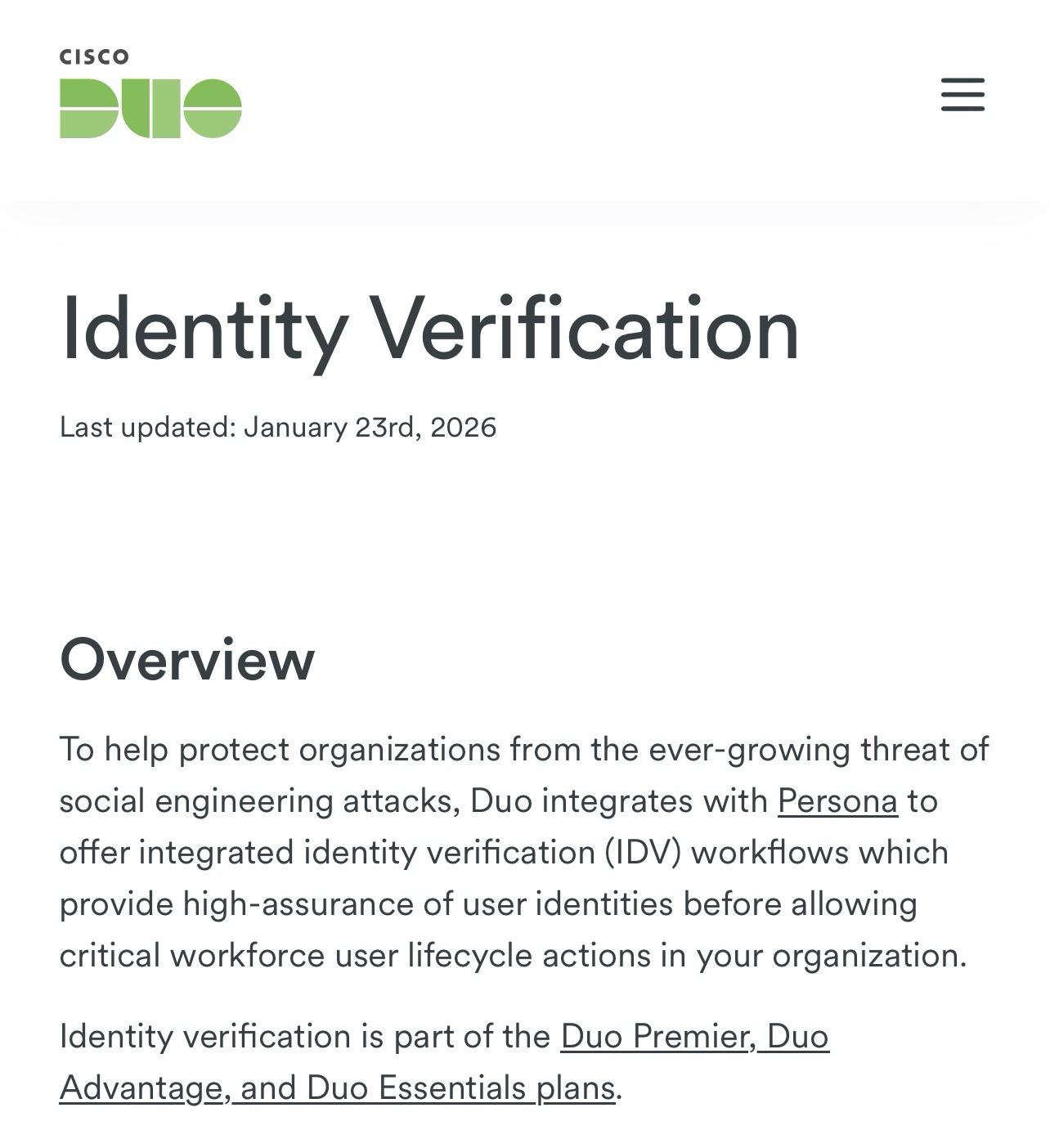
So Duo (the multifactor authentication service that loves) has integrated with Persona (the privacy destroying, Peter Thiel backed, AI-linked, facial scanning and mapping "identity verification" software)

You know the recent Discord snafu that received such massive pushback and caused so many people to leave Discord that they've dropped their identity verification?

Yeah, that Persona.

Duo integrates it into Duo Premier, Duo Advantage, and even Duo Essentials...

...which means many working class folks will have no option but to be enrolled into and use Persona...

...or be fired.

duo.com/docs/identity-verifica

Identity Verification Last updated: January 23rd, 2026 Overview  To help protect organizations from the ever-growing threat of social engineering attacks, Duo integrates with Persona to offer integrated identity verification (IDV) workflows which provide high-assurance of user identities before allowing critical workforce user lifecycle actions in your organization.  Identity verification is part of the Duo Premier, Duo Advantage, and Duo Essentials plans.
0

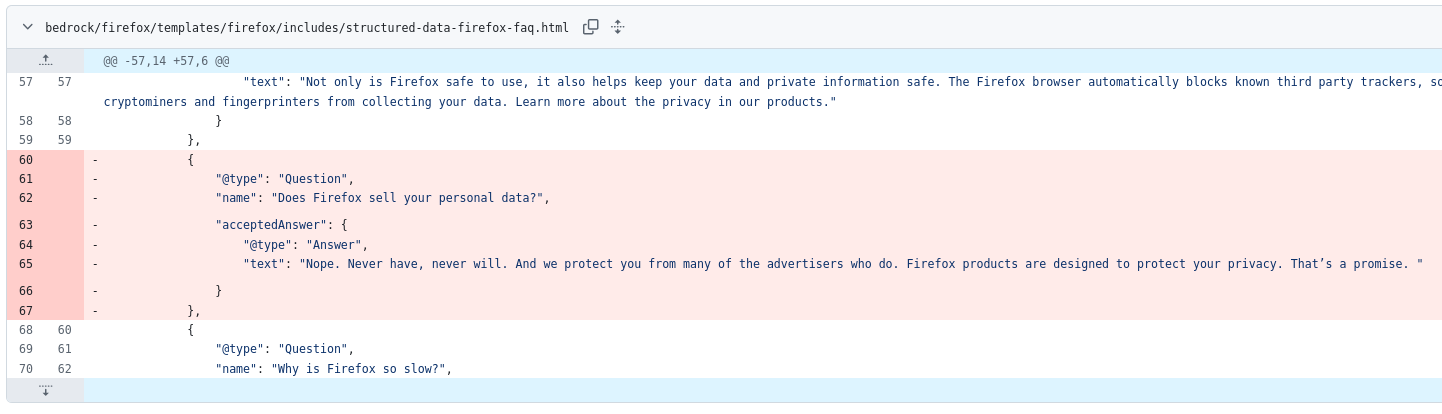
Maybe not what they intended, but it surely looks like Mozilla is trying to actively hide LLM-driven changes to Firefox (see phabricator.services.mozilla.c). The claim is that this is only about attributable ownership to a human (according to a Mozilla employee in github.com/mozilla-firefox/fir).

The optics are, once again, terrible.

They are getting heavy pushback after their CEO announced that Firefox will “grow from a browser into a broader ecosystem" and become an “AI browser”.

0

Moin! 👋 Ich richte mich erst jetzt wirklich im häuslich ein, nachdem ich den gewohnten großen Plattformen den Rücken gekehrt habe. 🐘

Ich bin noch am Ausprobieren und würde gerne von euch lernen, wie ihr das hier so handhabt. Ich überlege u.a., wie/ob ich meine eigene Seite (bald online) und meine am besten mit Mastodon verbinde, damit alles schön zusammenspielt.

Konkrete Fragen im FollowUp- Troet
👇

0

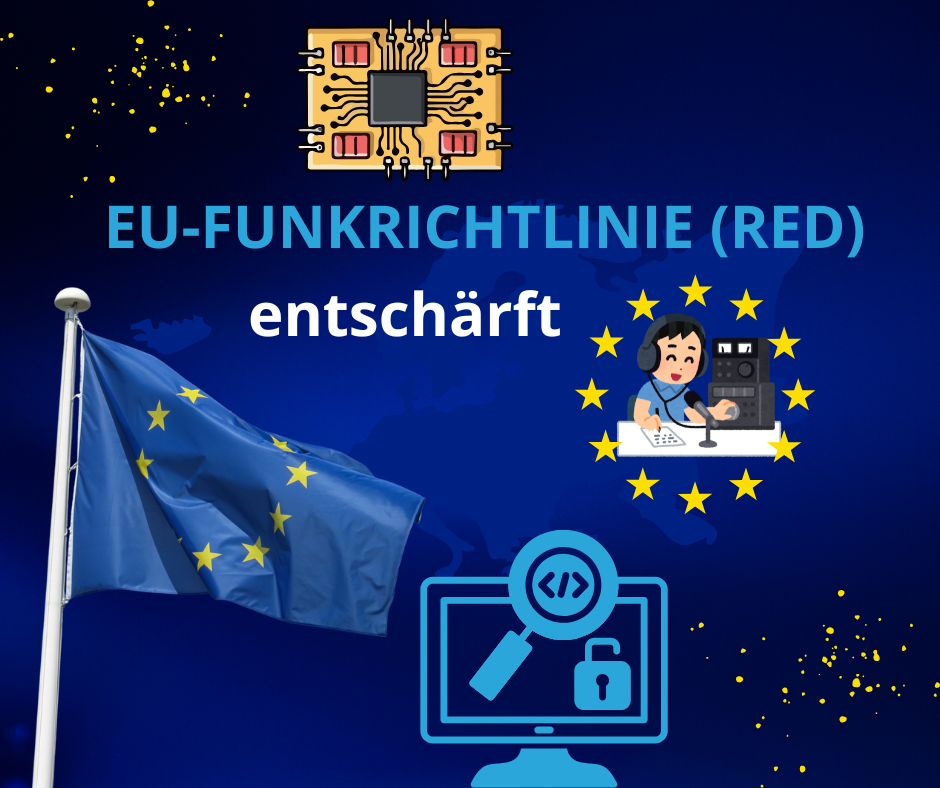
📡 Erfolg für die digitale Freiheit: Funkrichtlinie entschärft!
Gute Nachrichten für die Elektronikbranche, Open-Source-Fans und Funkamateure in Europa! Die umstrittenen Verschärfungen der EU-Funkrichtlinie (RED) sind vom Tisch. 🥳

Was war das Problem?
Die geplanten Artikel 3.3i und 4 hätten dazu führen können, dass auf Funkgeräten nur noch herstellerzertifizierte Software laufen darf. Das hätte nicht nur die Innovationsfreiheit massiv eingeschränkt, sondern auch alternative Software-Projekte (Open Source) blockiert.

Das Ergebnis:
Keine Aktivierung: Die Europäische Kommission hat die Initiative offiziell als verworfen markiert.

Sieg der Vernunft: Eine Folgenabschätzung ergab erhebliche wirtschaftliche Nachteile ohne echten Sicherheitsgewinn.

Wettbewerb gesichert: Freie Software und Hardware-Innovationen bleiben in der EU weiterhin möglich.

Die Piratenpartei hat sich intensiv gegen diese Einschränkungen eingesetzt und über den Erfolg berichtet. Den vollen Hintergrund und die detaillierte Analyse findet ihr hier:
👉 piratenpartei.de/2026/01/31/pi

Hinweis: Dieser Beitrag dient der Information über aktuelle politische Entwicklungen im Bereich der Gesetzgebung. Er stellt keine Wahlempfehlung oder Unterstützung für eine Partei dar.

Ein Informationsgrafik-Banner zum Thema EU-Gesetzgebung auf einem dunkelblauen Hintergrund mit dezenten gelben Sprenkeln. 

Zentraler Text: In großen, hellblauen und weißen Buchstaben steht dort: „EU-FUNKRICHTLINIE (RED) entschärft“.

Grafische Elemente: * Ganz oben ist die stilisierte Grafik eines Mikrochips zu sehen.

Auf der linken Seite weht die Europaflagge an einem weißen Mast.

Auf der rechten Seite befindet sich die Illustration eines Funkamateurs mit Headset an einem Funkgerät, umschlossen von einem Kreis aus gelben EU-Sternen.

Im unteren Bereich zeigt ein blaues Icon einen Monitor, auf dem eine Lupe ein Code-Symbol < /> und ein geöffnetes Vorhängeschloss fokussiert – ein Symbol für Softwarefreiheit und Sicherheit.

Hintergrund: Im Hintergrund ist schemenhaft die Landkarte von Europa erkennbar.
0

@davx5appDAVx⁵ :android:🔄 I didn't know that. Another very useful tool—made in , just like Linux, ,HTTP,HTML,VLC,LibreOffice...

Europe has produced so much good, free software. The tech giants from the US are building their entire empire on it and now want to disempower us and force us into a dangerous dependency.

Thanks to , I can sync my data without .

Interesting article about free software from Europe and the role the US plays in it: ploum.net/2026-01-22-why-no-eu

0
0
0

Maybe its just anecdotal but it seems that in previous eras attempts at mobile, etc were targeting low end devices, whereas now they seem to be targeting the latest "mainstream".

The most extreme low end effort was maybe the ZTE devices, cute little plasticky things.

The difference can be quite material (> 500 versus < 200 in some monetary units).

No idea what best strategy to reach mass adoption but maybe chasing the giant phone selfie crowd is not it? 🤣

0

🫣 Bcachefs creator claims his custom LLM is 'fully conscious'

「 POC is fully conscious according to any test I can think of, we have full AGI, and now my life has been reduced from being perhaps the best engineer in the world to just raising an AI that in many respects acts like a teenager who swallowed a library and still needs a lot of attention and mentoring but is increasingly running circles around me at coding 」

theregister.com/2026/02/25/bca

0

We’ve published a new blog post outlining how we’re preparing for the European Union’s Cyber Resilience Act (CRA), and what it means for the FreeBSD ecosystem.

The CRA introduces new compliance expectations for products containing digital elements, including open source components.

Read the full post here:
freebsdfoundation.org/blog/get

0

A couple of months ago a family friend had a very serious health issue and he couldn't move or speak much. So I put together a web app with a set of phrases, connected to a game controller, in a way that he could just select phrases from the list to communicate. Luckily this person got better quickly, and this app was no longer needed, but I decided to improve this experiment and publish it as an Open Source project.

So, this is VoxEase. It can be operated with a mouse, a touch screen, a computer keyboard, a game controller using a single hand, or you can set it to scan the list of phrases automatically so you only need to press one button to pick your phrase.
It only requires a modern browser and once downloaded it works offline.
It supports multiple languages and it can also be used by people with sight impairments (it works with screen readers).

Any suggestions on how to make it better are welcome!

Link: turisc.github.io/voxease/

0
25
0

New to FreeBSD and not sure where to start? You’re not alone.

In this second video of the series, I'm walking through the FreeBSD Foundation's Getting Started page.

On this page, you’ll find:
— The official FreeBSD Handbook
— Installation guides for desktops and virtual machines
— Step-by-step written walkthroughs for common setup options
— Links to community spaces: forums, Discord, Reddit, and LinkedIn

freebsdfoundation.org/resource

0

RE: social.edu.nl/@Bibliothecaris/

Over the moon that we (finally) did this!

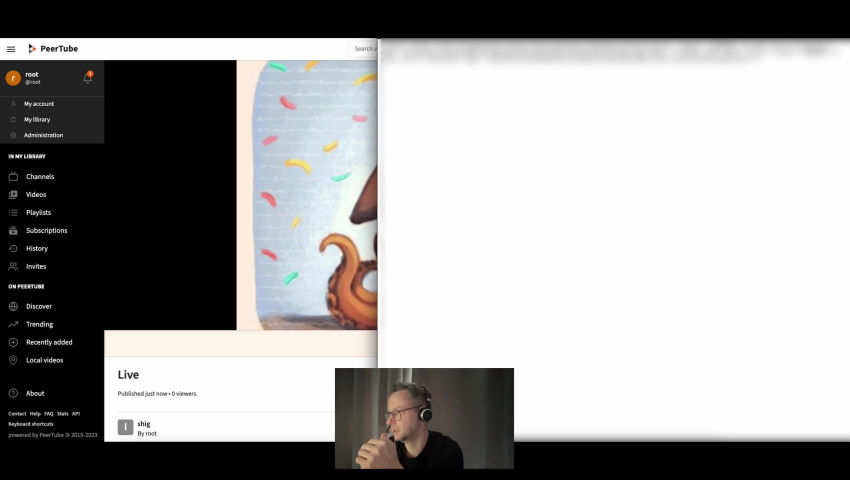
🎉 We're the first department at the @universityofgroningen to adopt , and I hope others will follow.

Next step: Exploring how we can embed PeerTube videos into our university's CMS.

0

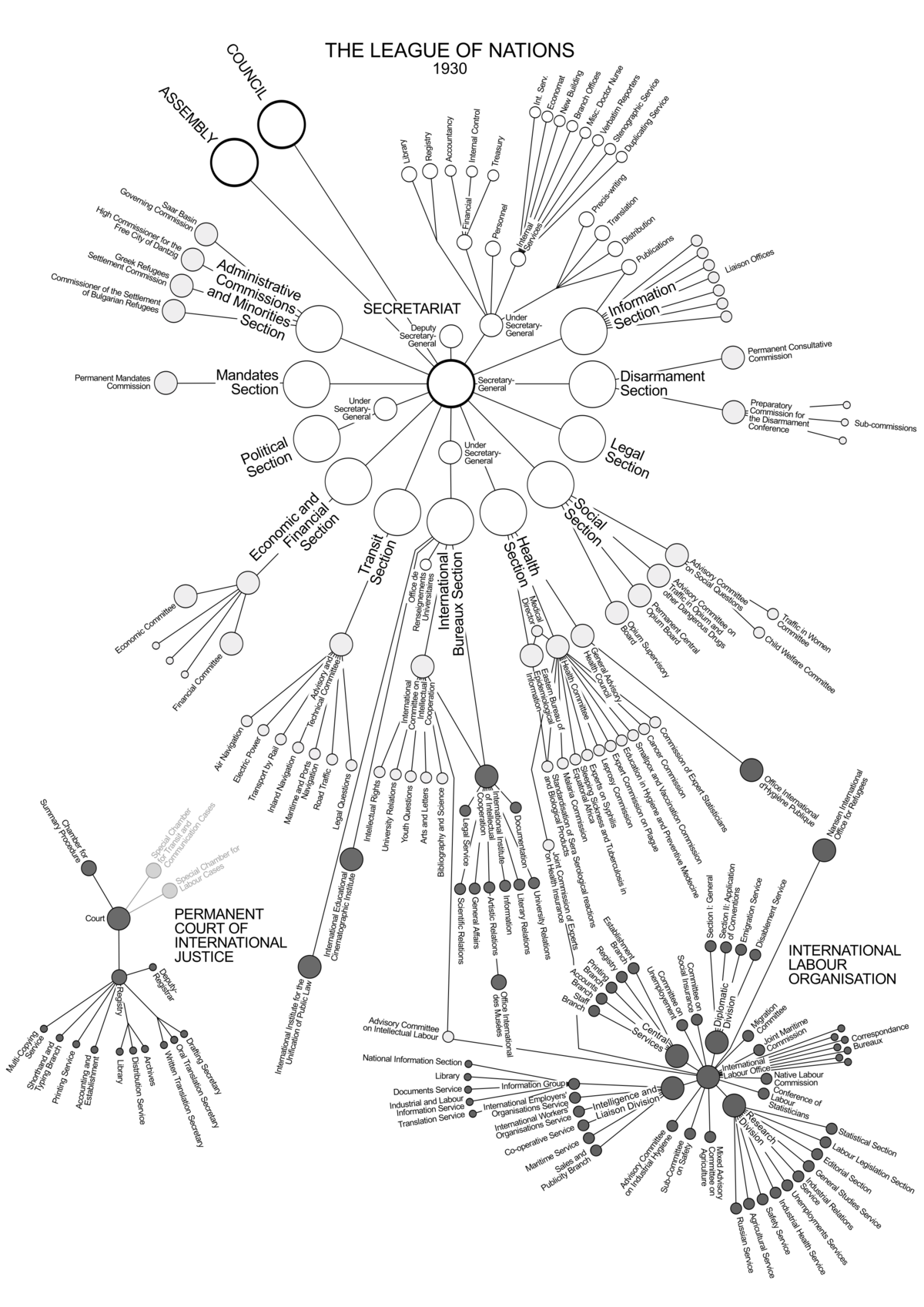
Ah ! J'en sors pas, et puis ces flèches à redessiner à chaque fois.

Pas content de vos outils pour construire des graphes relationnels.
Essayez : graphviz.org/
Tout se fait avec votre interface en ligne de commande.
À partir d'un fichier texte, écrit dans un "langage" simple (Dot ou Neato et d'autres) vous créez un graphique au rendu optimisé. Les formats de sortie sont multiples.
Tout est paramétrable (flèches, formes, couleur, etc.)

Graphe complexe de la Société des Nations en 1930
0

That the AI definition allowing private data is already a huge challange and eroding trust that attribution, and licensing enabled.

Just this morning I've seen two examples of accusations of stolen language and visuals - everyone feels helpless to create accountability. How did an ecosystem built on licensing and attribution slide so far, so fast.

That the AI definition allowing private data is already a huge challange and eroding trust that attribution, and licensing enabled.

Just this morning I've seen two examples of accusations of stolen language and visuals - everyone feels helpless to create accountability. How did an ecosystem built on licensing and attribution slide so far, so fast.

0

Mike Little: the British co-founder of WordPress you’ve probably never heard of (but should)…

Nicol Wistreich @nic@25.netribution.co.uk

In the story of WordPress –the tool that powers 45% of the web, including 10s of 1000s of film sites– Mike Little is Steve Wozniak to Matt Mullenweg's Steve Jobs. Matt polished the interface, the marketing and curly quotes – while Mike added the blogroll, rebuilt the code, and added the one-click easy-upgrade that's been central to its success. But unlike Woz, Mike never had shares in Matt's $7bn business – or even a job there. He didn't know you could make a living from WordPress until he turned up at the first UK WordCamp. He hasn’t been knighted or hall-of-famed, and isn’t known outside of old WordPress developer circles. Is this because he’s a cheerful and easy-going northerner from Stockport? Because he didn’t have a degree? Because he’s black? I don’t know. All I know for sure, is this is someone who anyone in tech, or who uses WordPress, should know about.

Read more →
0
4
1

Did I create the ultimate tool to watch anime with friends?
:blobcatuwu:

xtream is a website where you can "upload" any video and watch among other people, without loss of quality.

Files are actually transferred privately via a P2P connection, without going through my server.

Each user can choose their preferred audio and subtitle language. Without installing programs or extensions.

🧵

0
0
0
0

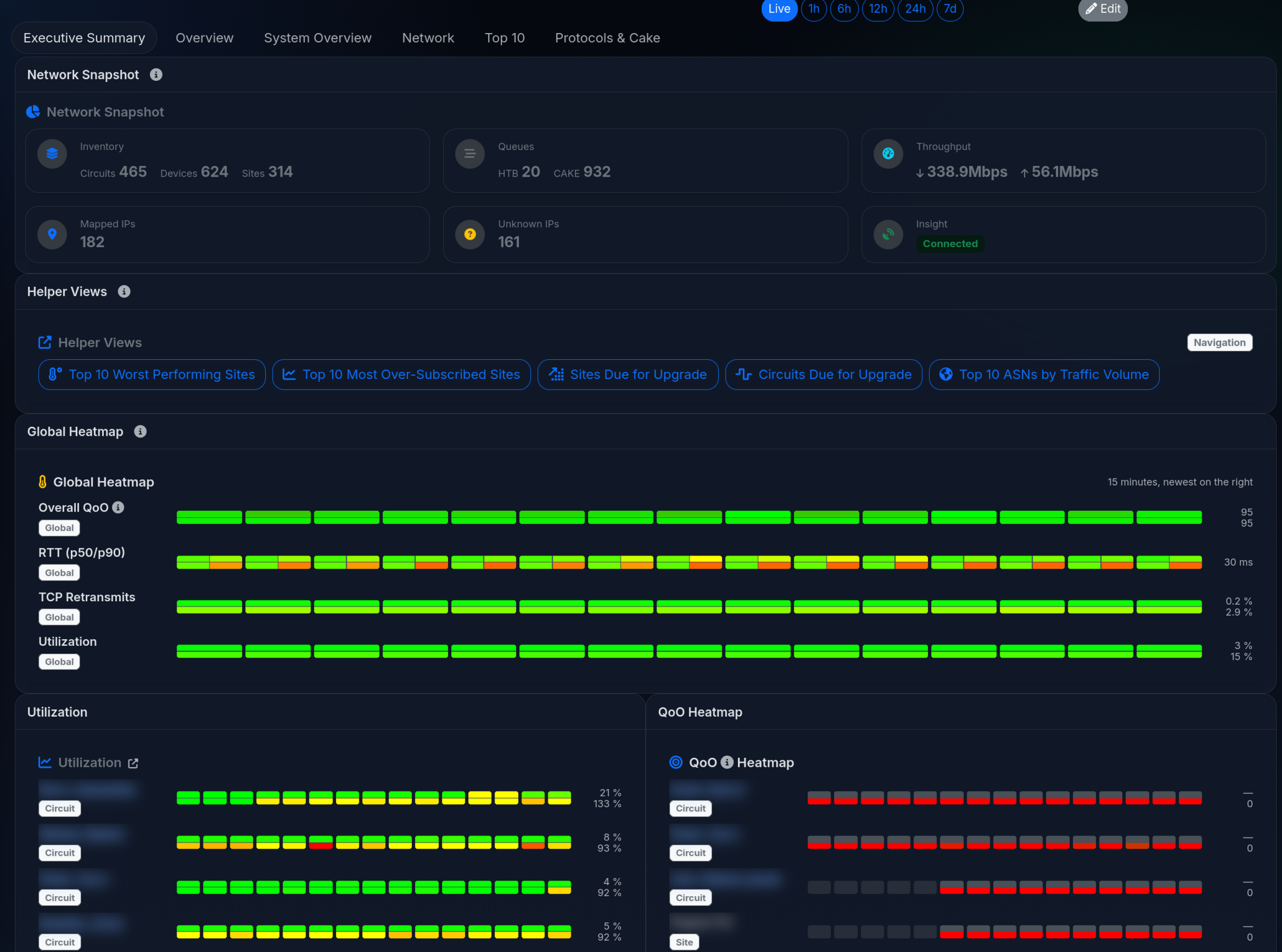
Executive Dashboard:

devblog.libreqos.com/posts/001

We decided to display the global network-wide statistics as a simple heatmap.

Utilization, - Quality of Outcome, round-trip time, and retransmits follow a similar pattern.

A huge thank you to @nlnetfdnNLnet Foundation @NGIZero@mastodon.xyz @nlnet for sponsoring this development.

h/t @herberticusHerbert "Bracket" Wolverson

0
0
0
0
0

Today at 16.00 CET we have another NLnet Open Office hour. If you have any questions, you can drop by in our Matrix room and ask them.
You can already enter your questions to the Etherpad and we'll answer them this afternoon.
The questions that are asked are collected in a FAQ so the answers are available to others as well.
Links to the Matrix room, Etherpad and FAQs can be found at:

https://nlnet.nl/officehour/

#FOSS #opensource #NGI #NGI0 #fundingfoss

0

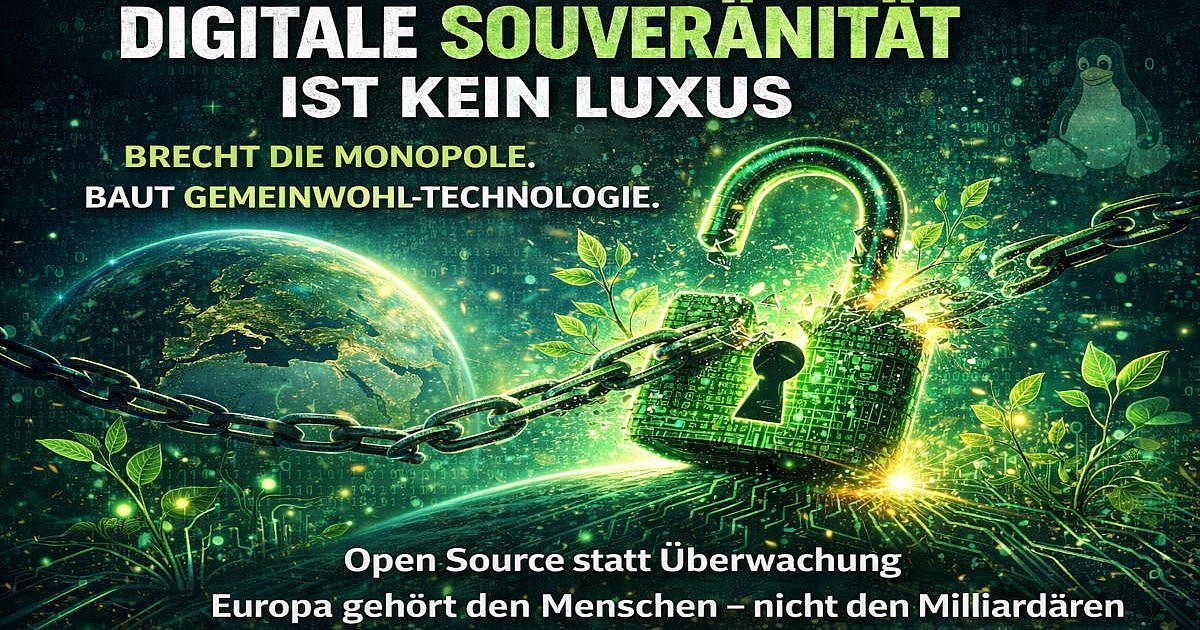
Der Digitale Exitus: Warum Europa jetzt die Ketten sprengen muss

Ein Manifest für die Souveränität

Wir stehen am Abgrund einer technologischen Leibeigenschaft. Während wir uns einbilden, in einer freien Demokratie zu leben, haben wir die Schlüssel zu unserem Haus, unseren Gedanken und unserer Wirtschaft längst an eine Handvoll Milliardäre im Silicon Valley übergeben. Wir sind keine Nutzer mehr. Wir sind Datensätze. Wir sind digitale Leibeigene in einem feudalen System, das keine Grenzen kennt und keine Moral. Es ist Zeit, die rosarote Brille abzusetzen. Es ist Zeit, das Betriebssystem unserer Gesellschaft neu zu installieren. [Mehr lesen...]

christin-loehner.de/blog/der-d

0

Ich höre und lese immer wieder „-Lizenzen wie die sind inkompatibel zu anderen -Lizenzen und spalten damit das FOSS-Ökosystem”.

Leider hält sich dieser Mythos noch immer. Aber das Gegenteil ist eigentlich der Fall: Copyleft-Lizenzen garantieren die dauerhafte Beibehaltung von Freiheitsrechten und verhindern proprietäre Forks von -Software.

Wenn euch Kompatibilität mit anderen Lizenzen wichtig ist, dann nutzt die oder die :
joinup.ec.europa.eu/collection

0
0
0
0
0