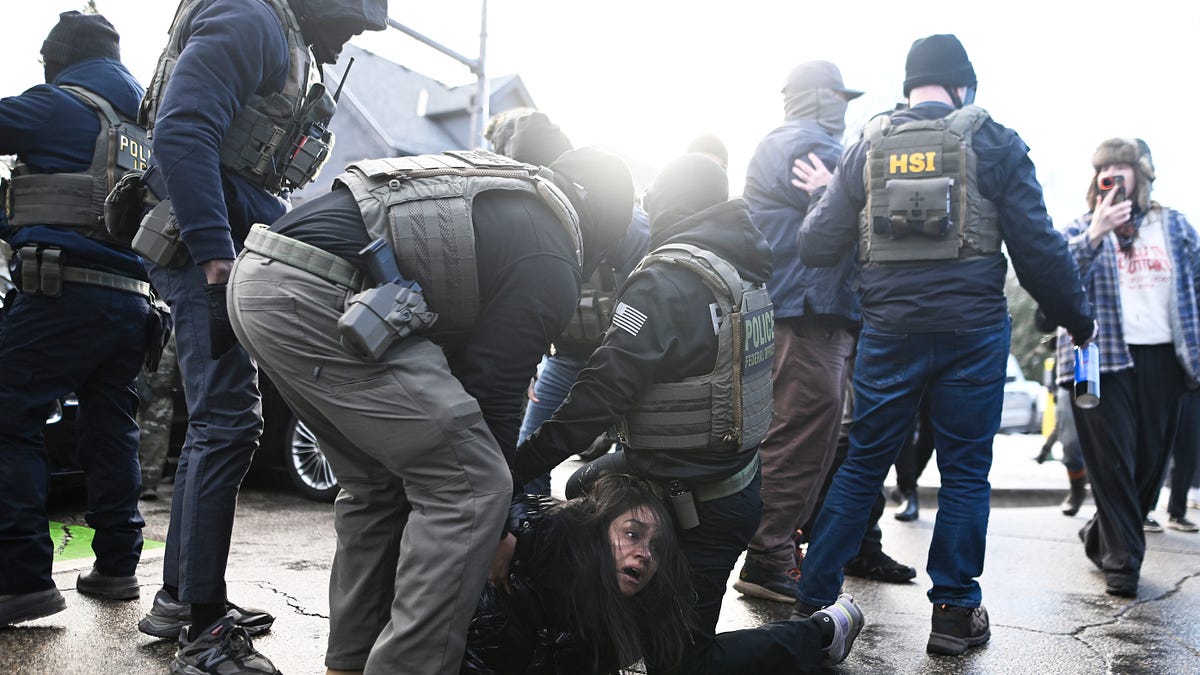
I rode passenger today on a patrol watching for ICE in my neighborhood in Minneapolis.
Our ride was mostly uneventful, the neighborhood we patrolled has been a target but just not this afternoon.
It took me a while to follow everything that is going on, and I felt rather incompetent even as a passenger. These communities are rapidly developing processes and their own kind of professional standards even as new people are constantly joining in. There is a large set of Signal groups covering different portions of the city and into the suburbs, as well as many subdivisions for reactive response. There's a schedule of dispatchers who run calls, formal handoff, other support people to take notes and follow the chat. Drivers are trying to spot ICE, peering into the tinted windows (so many people have tinted windows!), looking up license plates.
There's a protocol that I don't yet understand for what to do when you encounter an ICE vehicle. Several times a day I hear the caravans of ICE and observers honking as they go down one of the streets by my house; protocol is only to do that after a direct encounter and ICE officers leaving their vehicle. I'm not sure what that implies in terms of numbers.
Throughout the neighborhood many corners had people in hi-viz jackets on guard. It was around the time kids were coming home from school. These are being organized separately, by schools, community organizations, churches, and the many ad hoc groups that are popping up block by block.
This is all heartening, and impressive, and also sad because it's not nearly enough. People are doing their best, but their best can only slow down ICE. We can't solve this from here.




 Misty
Misty





 세랄이
세랄이 
























 Cat 🐈🥗 (D.Burch)








 Dr. Anna Latour
![A full body image of Goobie [cat] resting on the computer desk while using the tissues within the box as a pillow.](https://files.mastodon.social/media_attachments/files/115/880/604/240/655/674/original/4be6e0dd99bf1a5b.png)

 힐씨
힐씨
