Search results

0

The untold history of web development:

1990: HTML invented.
1994: CSS invented to fix HTML.
1995: JS invented to fix HTML/CSS.
2006: jQuery invented to fix JS.
2010: AngularJS invented to fix jQuery.
2013: React invented to fix AngularJS.
2014: Vue invented to fix React & Angular.
2016: Angular 2 invented to fix AngularJS & React.
2019: Svelte 3 invented to fix React, Angular, Vue.
2019: React hooks invented to fix React.
2020: Vue 3 invented to fix React hooks.
2020: Solid invented to fix React, Angular, Svelte, Vue.
2020: HTMX 1.0 invented to fix React, Angular, Svelte, Vue, Solid.
2021: React suspense invented to fix React, again.
2023: Svelte Runes invented to fix Svelte.
2024: jQuery still used on 75% of websites.

(By twitter.com/fireship_dev)

0
0
0

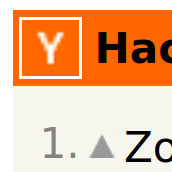
Today was the first time in my career I've actually used the <ruby> tag.

Granted I'm not using it exactly what it was designed for, but it's a decent compromise in having a fat icon accompanied by a small explanatory text, as opposed to doing this with a lot more CSS and some other semantically uninteresting containers.

A detail from a screenshot of a web page focusing on a link element meant to be repositioning the viewport at the top of the page.

The link text is composed of an arrow pointing up, with a smaller text underneath that says "top" in small caps, and having the link title being shown as a tooltip: "Go to the top".
0
0
0
0
0
0
0
0

0.2.0 of django-new has been released. 🎉

`uvx django-new [--api] [--web] [--worker] name [folder]`

- Basic project and app creation for APIs, websites, and worker use cases.
- Optionally create minimal applications similar to DEP-15 (aka, all files in one folder).
- Slightly opinionated folder structure to get you going, but no major decisions that force you into a corner.
- Only includes a few lukewarm takes.

🛠️ github.com/adamghill/django-new
📦 pypi.org/project/django-new/

django-new is designed to be used with uvx or pipx.

uvx django-new [--api] [--web] [--worker] name [folder]

django-new has some opinions about the folder structure and what files are most useful for certain use cases. For example, config is used to store "project-level" files like settings.py. The --api, --web, and --worker flags can be used as an additional modifier to create a specific type of application.

Along with the typical Django files, django-new also creates a few typically used files (if they do not already exist) when creating a new project:

- .env - Environment variables
- .gitignore - git ignore patterns
- pyproject.toml - Python project configuration (PEP 621 compliant)
- README.md - Project documentation

Create a new API
uvx django-new --api name [folder]
0
0

Unsure Calculator

Giovanni's (@gla@mastodon.social) bookmarks @ubnt@betula.tail3c2d2c.ts.net

Unsure Calculator

The Uncertainty Calculator enables users to perform calculations using precise numbers and ranges (e.g., 4 or 4 ± 6) to express uncertainty. It simplifies statistical reasoning for everyday decisions, helping users gauge potential financial outcomes in uncertain situations.

Key Features

  • Input both exact numbers and ranges with a tilde (~) to denote uncertainty.

  • Operates on basic mathematical operations: addition, subtraction, multiplication, and division, and supports functions like exponentiation, square roots, and trigonometric functions.

  • Utilizes a Monte Carlo method for computations, providing a probabilistic range of results.

  • Design is basic and intentionally user-friendly, aiming to empower those without deep statistical knowledge.

Limitations

  • Calculation speed is slower due to Monte Carlo simulations, and the formula parser may show errors.

  • Only normal distributions are assumed for ranges, providing a simplified model for uncertainty.

Practical Applications

  • Estimate financial viability of business ideas, calculate potential investment returns, assess risks, and more, all accounting for uncertainty in key variables.

#html, #programming, #webapp

Read more →
0
0
0
0
0
0
0
0
0
0

setHTML(), Trusted Types and the Sanitizer API. Ollie Williams explains how the new setHTML() method and Sanitizer API help prevent XSS by safely inserting HTML into the DOM. Combined with the Trusted Types API, they provide a modern, configurable way to control what elements and attributes are allowed, eventually replacing libraries like DOMPurify. Supported in Firefox Nightly and Chrome Canary.

olliewilliams.xyz/blog/sanitiz

Oct 29, 2025. setHTML(), Trusted Types and the Sanitizer API. olliewilliams.xyz
0
0
0

Hello Fediverse, hello Bits&Baeume,

I’ve moved recently, time for a (re)introduction — and a heartfelt Thank You! to @benBen :bub:

I am a writer, copywriter, online editor, and I generally write a lot; I design websites with plain HTML/CSS/JS or using WordPress and other CMS; occasionally I work as a speaker, podcast producer, sound designer — to mention the most important bits.

My blog: wernerprise.com/blog (mostly German, but I am considering making it bilingual at some point.)

Climate catastrophe is on my mind, degrowth close to my heart; capitalism needs a short leash!

Also, I still take SARS-CoV-2 and COVID-19 very seriously. Thus:


0

Hallo Fediverse, hallo Bits&Baeume,

ich bin umgezogen und erst seit ein paar Stunden hier auf dem neuen Server, deswegen eine kurze Vorstellung — und ein herzliches Dankeschön an @benBen :bub:

Ich bin Texter und Online-Redakteur, schreibe auch sonst viel; ich gestalte Websites in HTML, mit WordPress oder anderen CMS, arbeite außerdem gelegentlich als Sprecher, Podcast-Produzent, Sounddesigner – um mal die wesentlichen Dinge genannt zu haben.

Mein Blog: wernerprise.com/blog

Mir liegt die Klimakatastrophe auf der Seele und Degrowth (Décroissance) am Herzen; Kapitalismus braucht straffe Zügel!

Außerdem nehme ich nach wie vor SARS-CoV-2 und COVID-19 ernst. Daher:


0
0
0
0

How does the semantic html community feel about using the <details> element to “expand” into a form submission confirmation, when submitting “dangerous” operations, instead of a <dialog>? Notably, the thing I’m working on is currently fully JS-optional so far, and I would like to keep it that way.

EDIT: Oh it looks like <button> has command and commandfor, which can open a <dialog> now.

EDIT2: oops, but it's not baseline yet, and won't be for a while. It just released in preview for Safari and Firefox. ~sigh~

0
0
0
0

Previously we wrote about Reciprocate, a library for adding signal-based reactivity to server-rendered .

Pretty cool problems to have solved, but what if you wanted more dynamic client-side smarts and the ability to write declarative templates with a trusty html`` function?

Tada! 🎉 Thanks to Joe Pea @trusktrJoe Pea that problem has also been solved. Wire up these two solutions together, and you'll be authoring new UI components using familiar DX. 🙌
thathtml.blog/2025/10/nimble-h

0
0

For those who wanted to see the code behind my CSS-only magical sticky auto-expanding sidebar nav in action, I've put together a little CodePen for you! I've narrowed down the relevant code to just what's needed to get this to work, with some very minimal JavaScript to improve the accessibility of it! I've even left you a little challenge in there for you, let me see how you accomplish it!

codepen.io/Snugug/pen/VYezVKr
mas.to/@snugug/115259058092836

0

I feel that " is purely terrible and should be obliterated from the planet because modern is enough" crowd often miss the role it plays in dictating the weight of importance for new features that flow into native and .

Its right there in chapter four of "HTML5 for Web Designers" (Jeremy Keith)

Developers hack together a solution with and eventually browser vendors go "oh snap, yeah, maybe we *could* just have CSS for popular thing" and out it comes.

You can't have amazing CSS without browser vendors understanding what is important for developers. Its a lovely, beautiful feedback loop.

Screen cap of HTML5 for web designers - with the text highlighted: This is a recurring trend. If a pattern is popular enough, it will almost certainly evolve from requiring a scripted solution to something more declarative. That’s why CSS3 introduces even more animation capabilities that previously required JavaScript.
0